Author: ICTSadmin

  • FPA RFU 12 promotes product stewardship, BFS to 56 North Cotabato farmers

    FPA RFU 12 promotes product stewardship, BFS to 56 North Cotabato farmers

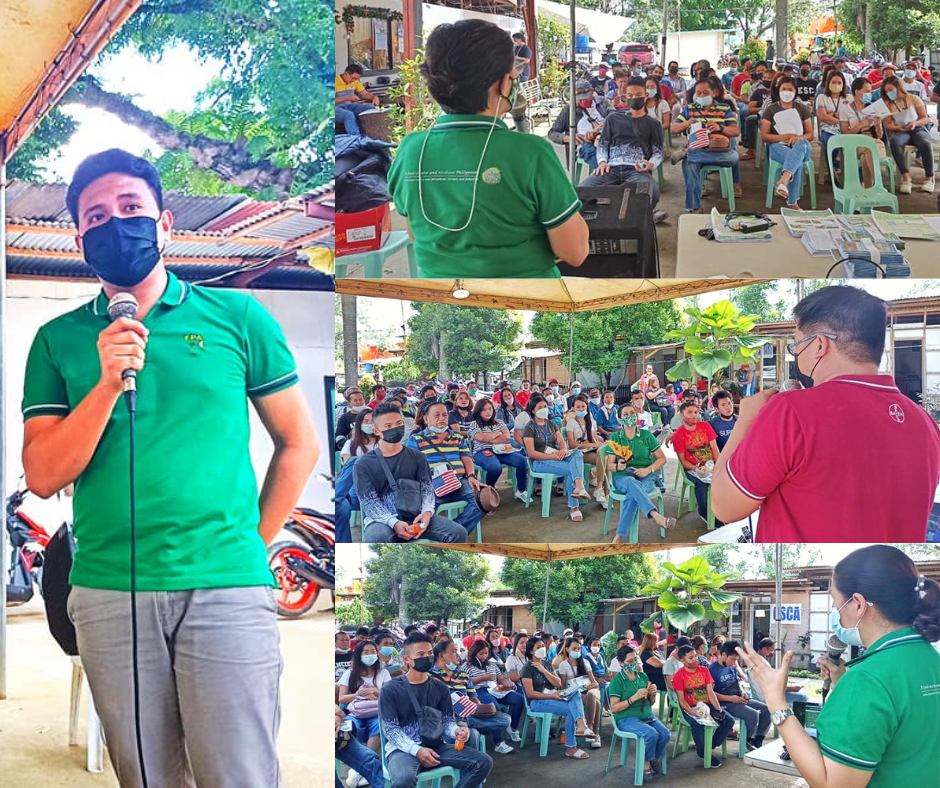
    MAKILALA, NORTH COTABATO | June 23, 2022– Fertilizer and Pesticide Authority (FPA) SOCCSKSARGEN headed by FPA Regional Officer Alita Bornea together with Provincial Officers (PO) Maricel Tabigue and Joey Pascua, attended the product stewardship program of Bayer CropScience, Inc. where they introduced the FPA mandates, and promoted the Balanced Fertilization Strategy (BFS) Program to 56 Farmers in Makilala, Cotabato, on June 21, 2022.


    The program proper commenced with the presentation of FPA briefer by PO Tabigue emphasizing the mandates and functions of FPA, a regulatory agency under the Department of Agriculture, created to:


    • assure the agricultural sector of adequate supplies of fertilizer and pesticides through weekly monitoring of prices and Inventories to all FPA Licensed Dealers and Distributors;
    • rationalizing the manufacture and marketing of fertilizers;
    • protecting the public from the risks inherent in the use of pesticides; and
    • educating the agricultural sector on the use of fertilizer and pesticide products.


    Mr. Allen Jay Ponce of Bayer CropScience, Inc., lectured on the safe and judicious use of pesticides. He shared the proper type, amount, time, and application of agricultural pesticides and the use of proper Personal Protective Equipment (PPE’s). He also discussed proper labeling, classification, identification of pesticides and their hazards, and signal words to use. He also promoted the proper handling and disposal of pesticide containers through triple rinsing.


    PO Pascua explained the reasons for the unprecedented increase in fertilizer prices. Moreover, he promoted a program that encourages the use of combined organic and inorganic inputs and other forms of strategies (using farm wastes, animal manures, and even green manuring) to attain the maximum potential of farmlands while promoting balanced fertilization in maintaining soil fertility, which is the BFS, – a program of the Department of Agriculture through the OneDA Approach.


    PO Pascua also encouraged the farmers to submit soil samples to DA-Soils Laboratory in the region to determine the status of their farm and consult for appropriate fertilizer recommendations. In addition, he explained the role of FPA in the BFS program, which is to:


    • monitor the prices and sources of fertilizers;
    • provide the list of registered fertilizers, licensed handlers, and product lines; and
    • provide data on available fertilizers in the region.


    The activity was in collaboration with the Local Government Unit of Makilala thru its Municipal Agriculture Office (MAO) headed by Acting Municipal Agriculturist Venancia Bangot, and with Bayer CropScience, Inc represented by Mr. Ponce, the Product Stewardship Associate of Mindanao.


    The participants of the program expressed their interest in having their soil tested as they hoped to use their learnings on BFS in their farming strategy. ###
     

    Written by:  Joey B. Pascuas | Published: 27 June 2022

      Fertilizer and Pesticide Authority (FPA) Online ISSN: 2815-1674
      Published by the FPA Information and Communications Team

  • Special Order No. 2022-093-A

    Special Order No. 2022-093-A

    Designating Ms. Maribel M. Querijero, Senior Agriculturist as Officer-in-Charge (OIC) of Fertilizer Regulations Division

  • Special Order No. 2022-093

    Special Order No. 2022-093

    Authority of Ms. Jerolet C. Sahagun to Attend the Codex Committee on Pesticide (CCPR) 53rd Session Meetings and Pre-Meeting

  • 25 AEWs in Leyte undergo pesticide handling training

    25 AEWs in Leyte undergo pesticide handling training

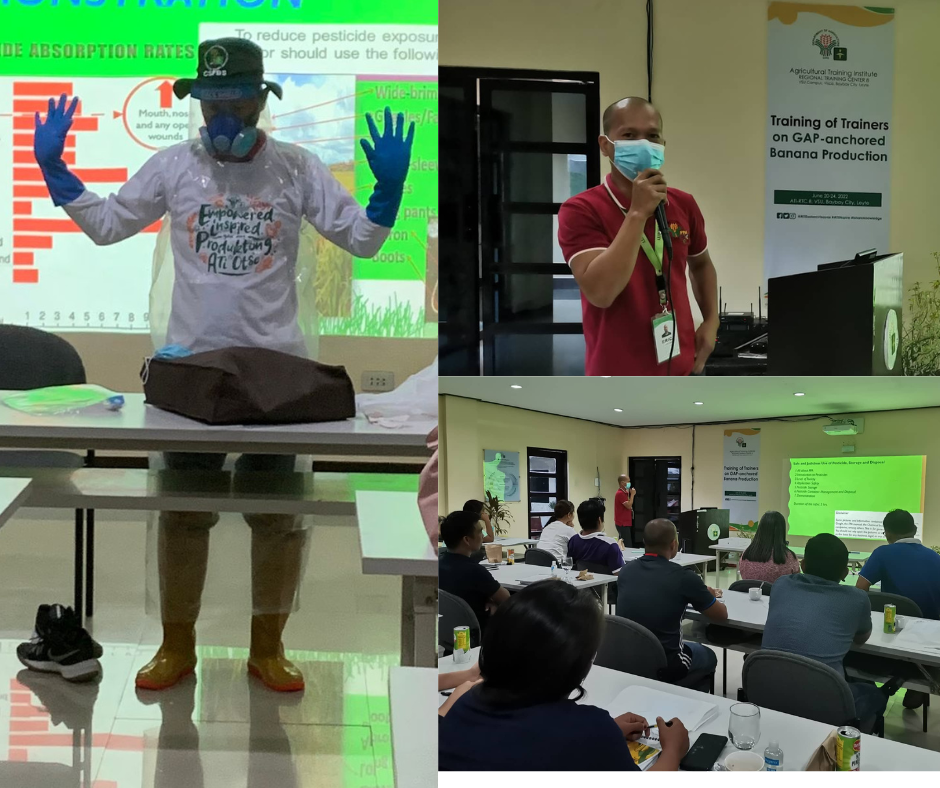
    LEYTE | June 21, 2022 – During the Training of Trainers (TOT) on “Good Agricultural Practices (GAP) – Anchored in Banana Production” organized by the ATI-RTC 8 last June 20, 2022, Provincial Officer (PO) Eric Castañas discussed the Safe and Judicious Use of Agricultural Pesticide Products to 25 Agricultural Extension Workers (AEW).


    He elaborated on the importance and the legal provision in labeling pesticide. According to Article V of the FPA Rules and Regulation No. 1 series of 1997, a proper pesticide label should be:


    • In every container of pesticide offered for sale, distribution, storage, and use;
    • Printed, stenciled, marked, embossed, or impressed on or attached to the container in a way its whole content can be read without detaching;
    • In English or any major dialect; and
    • Legible and distinct in its meaning.

    PO Castañas cautioned that labels should not be detached, altered, defaced, changed or destroyed in whole or in part and read multiple times.


    He explained that pesticide exposure can be occupational, spray drift or environmental, by accident or intention. He further added that poisoning can be through dermal exposure, oral ingestion, and respiratory exposure.


    In case of suspected poisoning, PO Castañas instructed:


    • To let the poisoned person take a bath using alkaline soap, as a first aid treatment;
    • Applying egg white within 1 hour of the incident is also advisable;
    • If eyes were exposed, rinse them with running water;
    • Mouth wash using 1 tbs of baking soda per glass of water is also advised; and
    • When condition does not improve after following label directions for first aid, immediately seek medical attention and bring the product label for the doctor to see.

    PO Castañas ended his lecture with ways on how to properly and safely store and dispose pesticides. He reminded the group to always wear proper attire when handling harmful chemicals.


    “To reduce pesticide exposure, the applicator should always wear proper PPEs. This includes a wide-brimmed hat, goggles or face shields, masks, long-sleeved shirt, gloves, long pants, apron, and boots,” he coached. ###


    Written by:  Claudette Mae C. Terciño and Eric Castañas | Published: 23 June 2022

      Fertilizer and Pesticide Authority (FPA) Online ISSN: 2815-1674
      Published by the FPA Information and Communications Team

  • ‘Balanced Fertilization, key to nutrient management’, FPA RFU 8 explains during ATI’s AEW training

    ‘Balanced Fertilization, key to nutrient management’, FPA RFU 8 explains during ATI’s AEW training

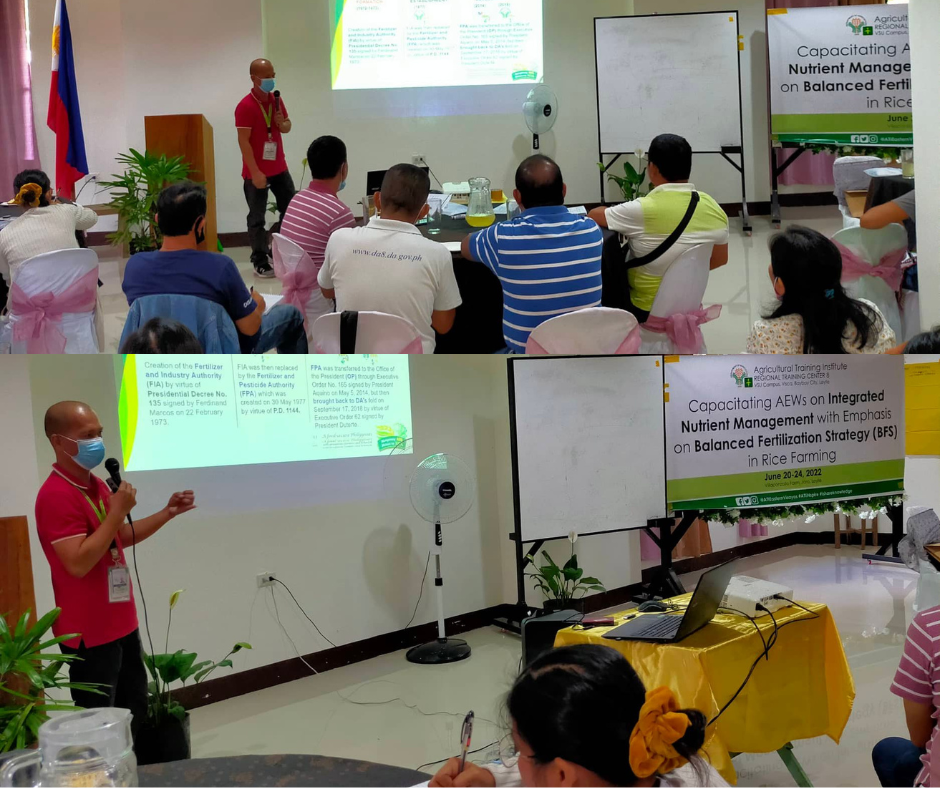
    LEYTE | June 22, 2022 – Provincial Officer (PO) Eric Castañas promoted the Balanced Fertilization Strategy (BFS) during the training on “Capacitating Agriculture Extension Workers (AEW) on Integrated Nutrient Management (INM) with an emphasis on Rice Farming” organized by the Agricultural Training Institute (ATI) last June 20, 2022 at Villaconzoilo Farm, Jaro, Leyte.


    Thirty-one (31) AEWs from various provinces in Region VIII, including Municipal Agriculturists and Agricultural Technicians, attended the training.


    PO Castañas started his lecture by explaining the reasons behind the fertilizer price hike:


    • Liberalization of Fertilizer Industry – In 1986, FPA relinquished its control over the procurement of fertilizer;
    • Philippines as an importer of fertilizer – 90% of fertilizer are imported from China, Indonesia, Malaysia, Qatar, Canada, Korea, Saudi Arabia, Belarus, and others. Only 10% supplies are taken from our local manufacturers like Philphos and Atlas;
    • Higher global demand – USA, Australia, Brazil, India, and China required more fertilizer thus local distribution was prioritized. They were also able to bid earlier for fertilizer as their demands are higher than that of our country;
    • Increase in price of raw materials – Prices of sulfur, natural gas, and other raw materials for fertilizer have also increased according to the World Bank as of 2021;
    • Increase in transportation and logistics cost – Oil and fuel prices kept rising, COVID-19 restrictions also limited our access with certain countries. And the cost of transportation from the country of origin down to the local dealers are also increasing.

    With the rising prices of fertilizers, the BFS Program is seen as a solution on the optimum use and combination of inorganic fertilizer and organic materials while ensuring that the appropriate nutrients is being sustained to the crops. This will assure good production while preserving the nutrients and improving soil structures.


    This alternative technique of fertilization has given hope to many participants of the event. They hoped to apply BFS in their rice farming and will share the knowledge learned to other agricultural workers as well. ###


    Written by:  Claudette Mae C. Terciño | Published: 23 June 2022

      Fertilizer and Pesticide Authority (FPA) Online ISSN: 2815-1674
      Published by the FPA Information and Communications Team

  • FPA discusses ASD responsibilities and promotes BFS to 48 dealers

    FPA discusses ASD responsibilities and promotes BFS to 48 dealers

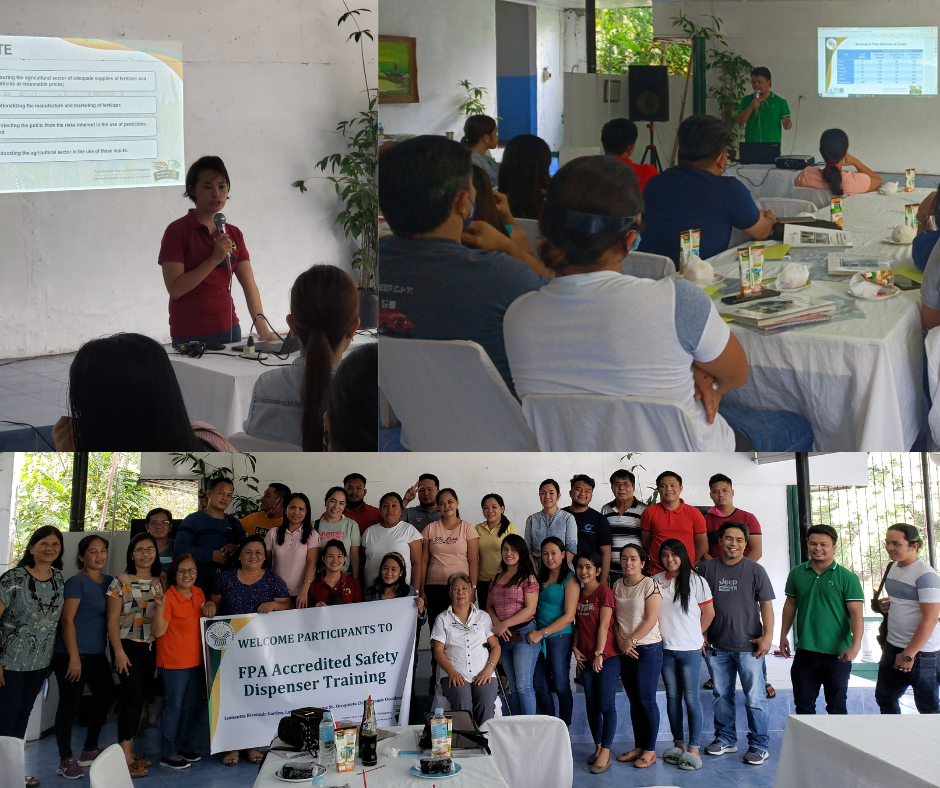
    CAGAYAN DE ORO | June 21, 2022 – FPA RFU 10 organized an Accredited Safety Dispenser (ASD) training for 48 dealers from Misamis Occidental and Lanao del Norte on June 8-10, 2022, at Lumantas, Riverside, Oroquieta City, Misamis Occidental and Guian Foodhouse, Brgy. Lanao del Norte.


    Provincial Officer (PO) Lorna Sajol discussed topics related to ASD, giving emphasis on their responsibilities as follows:


    • advise the buyers/farmers on the safe use, handling, and storage of fertilizer and pesticide products;
    • keep records of the sale and disposition of agricultural products;
    • ensure that only FPA registered products are dispensed; and
    • monitor the business transactions regarding fertilizer and pesticide products.

    On the other hand, PO Romnick Boctot explained the Balanced Fertilization Strategy (BFS).

    With the rising fertilizer prices, the Department of Agriculture (DA), FPA, and other attached agencies came up with BFS as a countermeasure for sustaining crops productivity.


    BFS is the combination of 4Rs (Right Source, Right Placement, Right Amount, and Right Rate) when applying fertilizer. This strategy ensures that the correct concentration and nutrients required by the soil and the crop are applied. Thus, it assures the quality of crops and improves soil health.


    The training was supervised by Regional Officer Ma. Sonia Calleja.


    Written by:   Romnick N. Boctot | Published: 23 June 2022

      Fertilizer and Pesticide Authority (FPA) Online ISSN: 2815-1674
      Published by the FPA Information and Communications Team

  • 53 vegetable growers undergo GAP training, includes safe handling and management of pesticide

    53 vegetable growers undergo GAP training, includes safe handling and management of pesticide

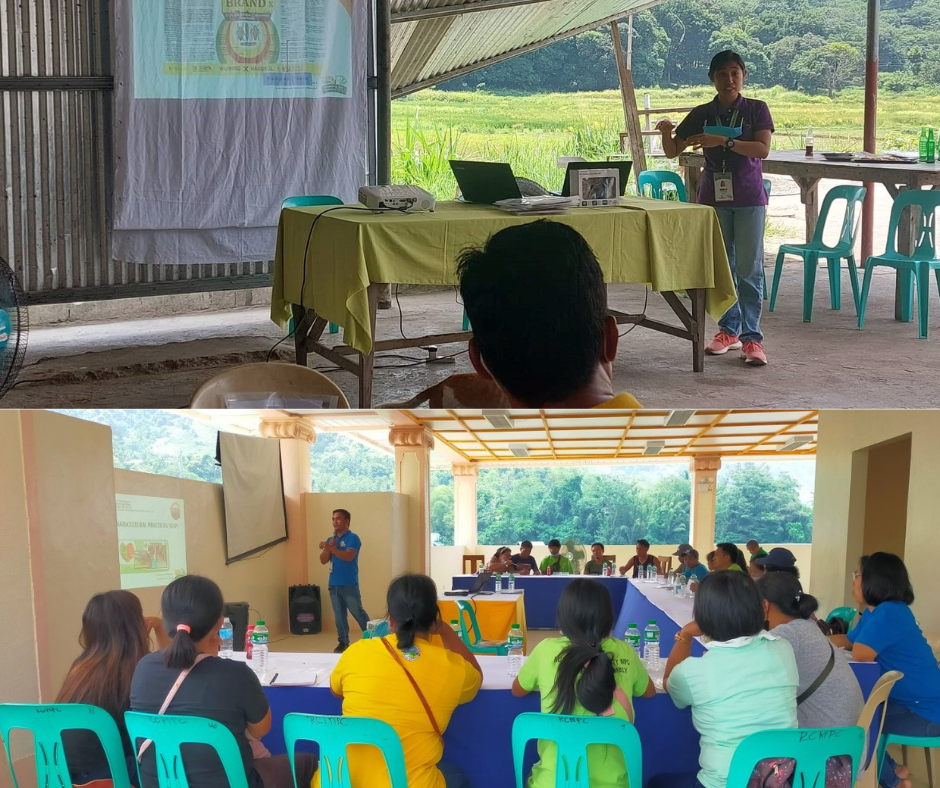
    NUEVA VIZCAYA | June 21, 2022 – FPA Regional Field Unit (RFU) II trained 53 vegetable producers on Good Agricultural Practices (GAP) in partnership with the Department of Agriculture (DA) Regional Field Office (RFO) II.


    From the 53 attendees, 28 were from Runruno Community of Quezon, and 25 were from Magapuy Farmers of Bayombong.


    Provincial Officer (PO) Roselle Anne Jose discussed the Pesticide Management. “We should read, understand and follow what is indicated in the pesticide label to be able to produce pesticide-safe vegetables,” PO Jose said during her discussion.


    She also suggested using other techniques like Integrated Pest Management (IPM) wherein four methods are used in controlling pests – cultural, physical, biological, and chemical method. Pest control included selecting planting materials, cleanliness in the area, introducing bio-control agents, and others before using the chemical methods.


    “Farmers should not rely solely on the use of pesticides. It should always be the last line of defense,” she added.


    The participants of the training expressed their gratitude for the information shared by FPA and DA. According to them, they heavily relied on chemicals to prioritize better quality produce while setting aside the harmful effects of these pesticides on them and their consumers. They promised to adapt the knowledge they gained in the training.  ###


    Written by:   Roselle Anne Jose | Published: 22 June 2022

      Fertilizer and Pesticide Authority (FPA) Online ISSN: 2815-1674
      Published by the FPA Information and Communications Team

  • FPA qualifies for FY 2020 Performance-Based Bonus

    FPA qualifies for FY 2020 Performance-Based Bonus

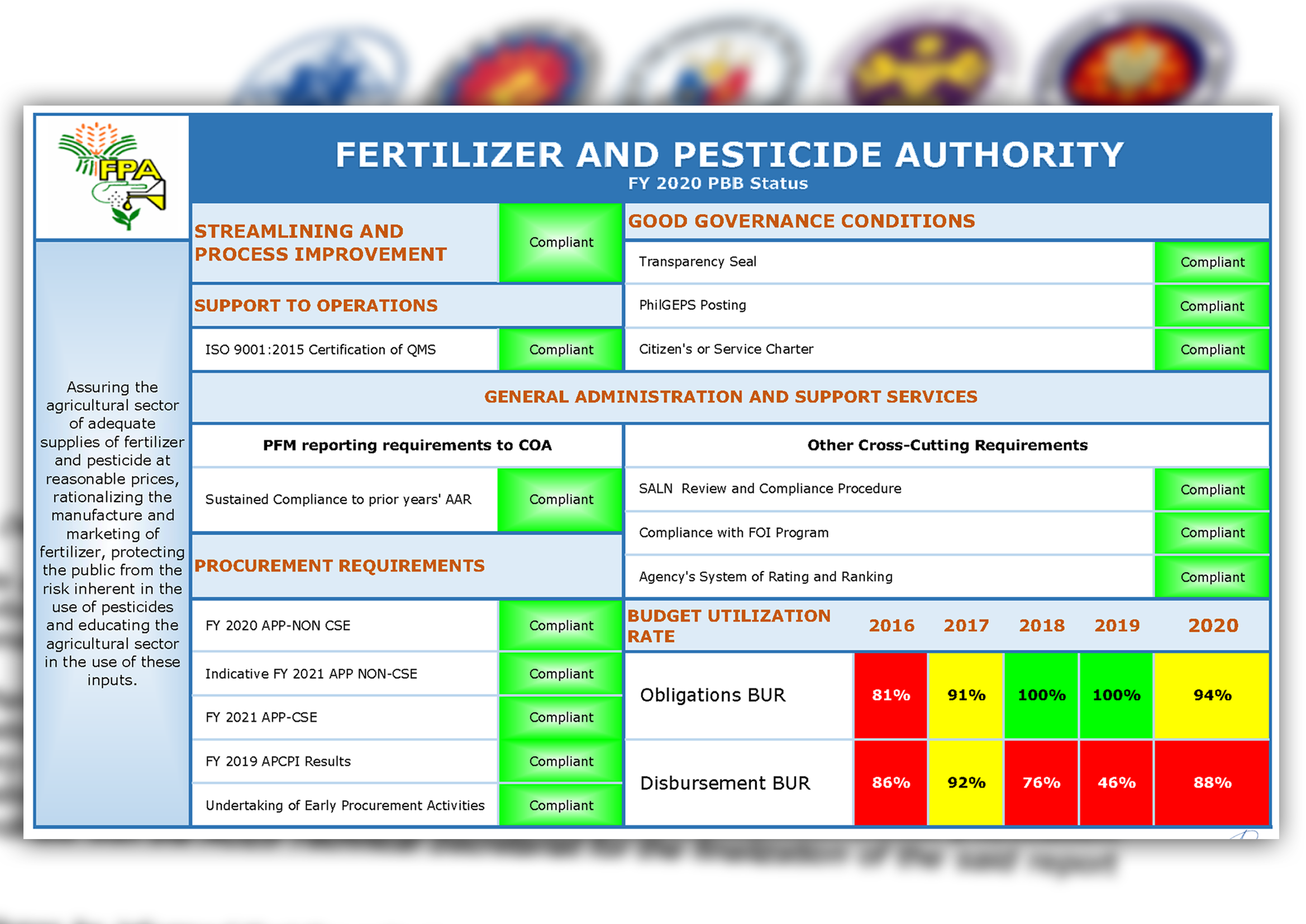
    QUEZON CITY | June 21, 2022 – The Fertilizer and Pesticide Authority (FPA) is granted with the FY 2020 Performance-Based Bonus (PBB) after the agency was validated as compliant with the requirements and qualifications set by the Inter-Agency Task Force (IATF) on the Harmonization of National Government Performance Monitoring, Information, and Reporting Systems.


    The IATF commended the FPA management and staff for their significant contributions to strengthening the Agency’s organizational and employee performance and delivery of goods and services to the public.


    The PBB is awarded to those agencies compliant with the following measurements: good governance, streamlining and process improvement, support to operations (STO), general and support services (GASS), freedom of information (FOI), and other cross-cutting requirements.


    Under the Good Governance Conditions, the FPA was found compliant with Transparency Seal, PhilGEPS Posting, and the Citizen’s Charter.


    For the 2020 Physical Target, FPA met the streamlining and process improvement required. Eighty-three (83) services were declared in the Agency’s Citizen’s Charter and 16 were reported as non-frontline services. The Agency managed to reduce process flow, required documents, and turnaround time for most of its services. However, the IATF asked FPA to review its fees and other transaction costs charged to clients for possible reduction. FPA was also encouraged to further digitize its initiatives by developing new online systems and improving contactless transactions for faster and more efficient public service delivery.


    FPA was also validated for the 2020 STO and GASS requirements including Quality Management System (QMS). According to the IATF, FPA was also able to obligate 93.72% of its Budget Utilization Rate (BUR) with 88.05% actual accomplishment for Disbursement BUR as reported by DBM BMB-E last March 22, 2021.


    Lastly, the FPA was able to comply with the posting of agency review and compliance procedure of statement and financial disclosure, Freedom of Information (FOI), and posting of Agency’s System of Ranking Delivery Units as Cross-Cutting Requirements.  ###


    Written by:   Wendycharlene B. Almasen | Published: 22 June 2022

      Fertilizer and Pesticide Authority (FPA) Online ISSN: 2815-1674
      Published by the FPA Information and Communications Team

  • Office Order No. 2022-21

    Office Order No. 2022-21

    Creation of the Fertilizer and Pesticide Authority Hazard Allowance Committee (FPA-HAC)

  • Special Order No. 2022-091

    Special Order No. 2022-091

    Authority to Attend the Virtual Mid-Year Performance Review for the 1st Semester, FY 2022