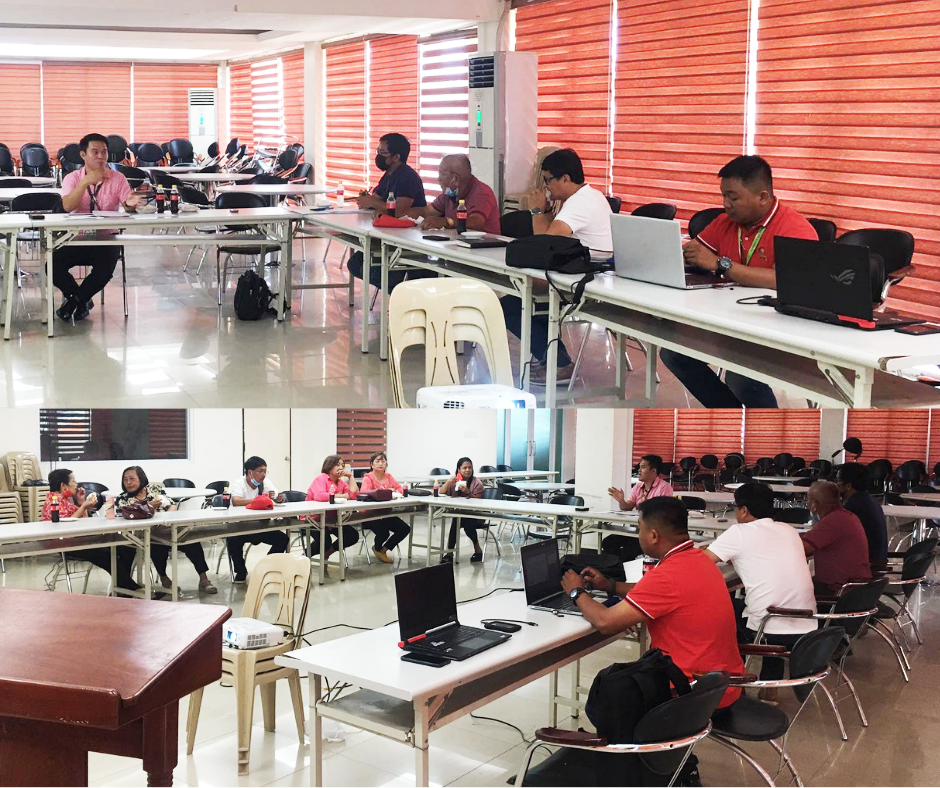
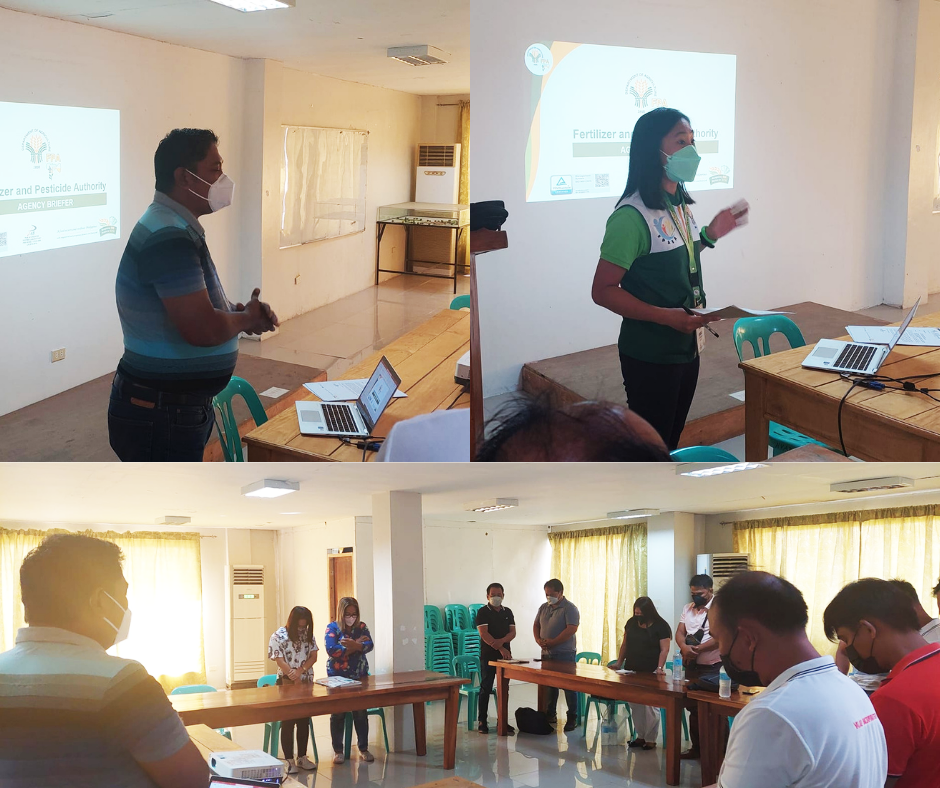
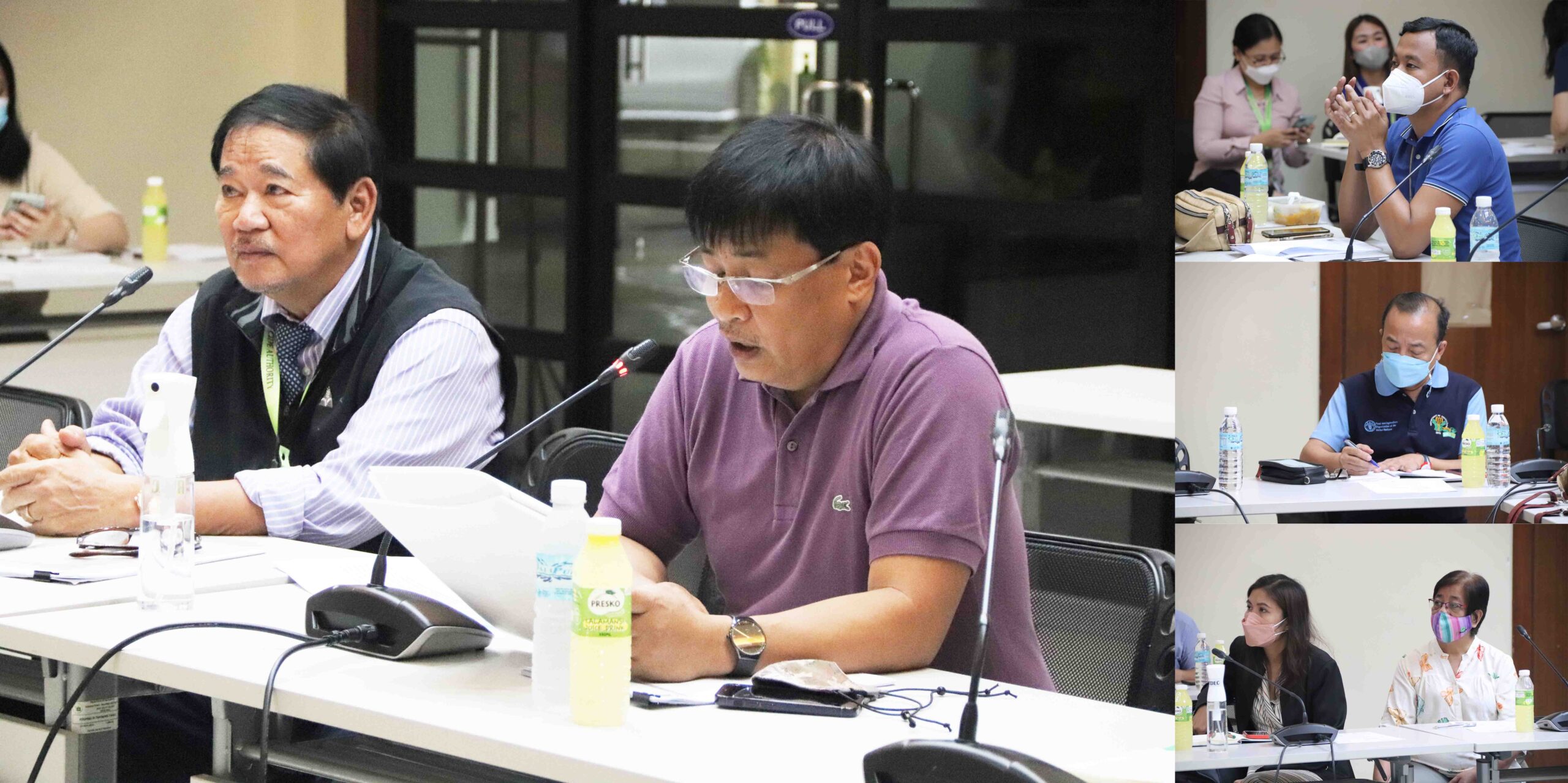
QUEZON CITY | April 13, 2022 – In view of the Department of Agriculture (DA) Special Order No. 286 series of 2022 creating the Balanced Fertilization Strategy (BFS) Management and Working Committees for its promotion and implementation, the committees jointly conducted its 1st meeting on April 12, 2022 at the RDEC Hall of the Agricultural Training Institute (ATI).
As the chairperson for the BFS Management Committee, FPA Executive Director Wilfredo Roldan facilitated the meeting while FPA Deputy Executive Director Myer Mula, the chairperson for the Technical Working Committee, started the meeting with the discussion on the roles of each committee member in the synchronization and implementation of the BFS program (Table 1).
Table 1. Roles of the Agencies for the Implementation of BFS
Agency | Roles |
BAR | - Conduct Research for Development (R4D) initiatives towards enhancement of BFS technology; and
- Provide funding support to implementing agencies carrying relevant activities on BFS technology scaling
|
FPA | - Monitor the prices and source of fertilizers;
- Provide the list of registered fertilizers, their licensed handlers, product name, target crops, plant growth stage, and direction for use upon application; and
- Provide database of available fertilizers per region
|
ATI | - Organize training over the cluster and conduct a nationwide capacity building activity to enhance capabilities of farmers on balanced fertilization;
- Promote strategies such as direct seeding and proper timing of fertilizer application to improve fertilizer use efficiency, among others;
- Coordinate with other DA agencies implementing BFS to harmonize ESETS-related initiatives avoiding duplication and maximizing resources at the national and regional levels;
- Develop appropriate harmonized trainings modules and learning materials for the delivery of BFS trainings and other capacity-building activities; and
- Provide trainings and capacity-building activities to ensure that BFS implementers will be able to correctly and properly do their respective roles and functions.
|
BAFE | - Provide design and inspection of various machinery for local fertilizer producers
|
BAFS | - Provide standards and monitor the quality of organic fertilizer and other organic fertilizer concerns
|
BPI | - Monitor the implementation of Good Agricultural Practices and Food safety relative to BFS technology implementation
|
BSWM | - Provide soil fertility and fertilizer guide map per region; establish large scale BFS technology demonstration;
- Prepare technology demonstration protocol;
- Identify Soil Reference Site (SRS) and Soil Monitoring Site (SMS);
- Establish technology demonstration according to agreed protocol;
- Monitor technology demonstrations sites; and
- Consolidate, analyze, and interpret data gathered
|
PhilMech | - Establish mechanization technologies on agricultural waste and by-product utilization for value adding and environmental protection; and
- Develop appropriate production mechanization technologies to complement BFS
|
PhilRice | - Establish rice technology demonstration;
- Monitor the performance of Balanced Fertilization Strategy; and
- Provide leaf color charts to all stakeholders as a tool in determining the right timing of fertilizer application.
|
The discussions evolved around but not limited to the following:
- Bureau of Agriculture and Fisheries Standards (BAFS) Dir. Vivencio Mamaril believed that all committee members should perform the roles stated in the S.O. He further emphasized that every member should be honest to the available data or system that the concerned agencies currently have and highlighted that the BFS committee should come up with a general recommendation for all crops (vegetative, reproductive, and harvest stage) and how to support or satisfy the recommendation. Bureau of Soils and Water Management (BSWM) can generate the recommended Nitrogen (N), Phosphorus (P), Potassium (K) requirement per crop while FPA can recommend registered fertilizer to be used. Further, he mentioned that the Philippine Center for Postharvest Development and Mechanization (PhilMech) can contribute to the program of converting biomass into fertilizer.
- Exec. Dir. Roldan agreed with Dr. Mamaril that improving soil analysis per region is critical for the BFS program’s implementation. He also emphasized the importance of consulting a plant nutritionist before using registered fertilizer.
- Furthermore, Dr. Mula expressed the need to stop the blanket recommendation of fertilizer. “We need to improve soil profiling since we have different types of soil structure that are greatly affected by different agro-climatic conditions per region” Dr. Mula said.
- The committee also recommended that the BSWM must update the national soil and water fertility map and take into account the fact that continuous application of inorganic fertilizer degrades soil properties critical for crop growth. Mr. Gerald Cammagay from BAFS proposed that the soil health map include physical, biological, chemical, and microorganic data in order to make the best recommendation.
- Dir. Mamaril proposed a matrix of various crops grown in the Philippines. The matrix includes commodities (rice, corn, tobacco, sugarcane, vegetables such as eggplant, tomato, cabbage, and carrots), the BFS status, the package of technology available, soil map if available, and remarks for fertilizer-combination demonstration trials with or without specific general recommendations. He also proposed that the Bureau of Agricultural Research (BAR) recommend or sponsor research on fertilizer combinations that use bio stimulants.
- Asst. Director Joell Lales of BAR informed the group that in 2013, the agency launched the “Yamang Lupa SCALE-UP Program,” or YL SCALE-UP, which includes the generation and distribution of soil health cards. A soil health card is a one-page information material that reflects general farmer information, soil macro and micronutrient analysis, and crop and soil management recommendations, among other things. The YL SCALE-UP Program will implement and expand on science-led soil revival strategies and management practices to increase farmer productivity and strengthen their coping mechanisms in the face of climate change. This strategy will be useful in the BFS Program as well.
- Apart from the program of BAR, Ms. Maribel Jalalon from the BSWM mentioned that the agency has already established soil mapping, national protocols for soil chemical analysis, soil health parameters, water resources, and monitoring sites and express her support with BAR’s soil health card programs.
- Engr. Jane Tapel, BAFE Deputy Director, suggested that the BAFE’s roles in the BFS can be expanded because they have many activities that can contribute to the BFS Program. She proposed that the BAFE roles in the BFS be expanded to include a digitalization program. She gave an example on how drones can easily calculate the amount of nutrients that needs to be applied.
With all of the comments discussed during the meeting, Exec. Dir. Roldan inquired about the agencies’ existing BFS programs that are currently being implemented. BSWM stated that they have already begun to contribute to the creation of the BFS Roadmap. Exec. Dir. Roldan stated that the roadmap to be developed will include the roles and programs of each member agency. He added that the BFS’s mission remains to promote the use of traditional and non-traditional fertilizers for the socio-economic improvement and benefit of the farmers.
To develop a better strategy for BFS implementation, both committees agreed to develop a matrix outlining their existing programs and how they might be used in BFS deployment. The matrix is due on April 20, and the next committee meeting is tentatively scheduled on May 5. ###
Sources:
DA Special Order No. 295 S. 2022, AMENDMENT TO SPECIAL ORDER NO. 286, SERIES OF 2022, “Creation of Management and Working Committees for the Promotion and Implementation of Balanced Fertilization Strategy (BFS)”.
DA Special Order No. 286 S. 2022, Creation of Management and Working Committees for the Promotion and Implementation of Balanced Fertilization Strategy (BFS).
Fertilizer and Pesticide Authority. (2022, April 12). 1st PMC Meeting on Balanced Fertilization Strategy (BFS)