Welcome to WordPress. This is your first post. Edit or delete it, then start writing!
Author: ICTSadmin
-
FPA, ARTA advance digitalization of pesticide product registration through “To-Be” process co-design workshop

Quezon City | March 17, 2026 – The Fertilizer and Pesticide Authority (FPA), in partnership with the Anti-Red Tape Authority (ARTA), conducted Workshop 3 of its Process Improvement Series on March 16–17, 2026, at the University Hotel, University of the Philippines Diliman, Quezon City, to redesign and streamline the pesticide product registration process in preparation for full digitalization.
The two-day activity, titled “To-Be” Process Co-Designing, gathered FPA officials, ARTA technical experts, and external stakeholders to collaboratively develop an improved regulatory workflow that will support the future online pesticide product registration system. The initiative is part of FPA’s broader digital transformation agenda aimed at strengthening regulatory efficiency, transparency, and service delivery.
Strengthening a Core Regulatory Function
In her message, Maribel M. Querijero, Division Chief of the Pesticide Regulations Division (PRD), emphasized that pesticide product registration is one of FPA’s core regulatory mandates.
“Through this process, pesticide products are carefully evaluated to ensure compliance with standards for safety, quality, and efficacy. These standards serve as safeguards that protect farmers, consumers, and the environment while supporting agricultural productivity,” Querijero said.
She noted that the efficiency and reliability of the registration system directly affect both FPA operations and the experience of registrants and stakeholders.
Under the leadership of Glenn DC. Estrada, Executive Director III of FPA, the agency has identified ten key strategic initiatives to strengthen regulatory services and institutional capacity. Among these priorities is the digitalization of frontline regulatory services, including pesticide product registration.
However, Querijero stressed that digital transformation is not merely about introducing technology.
“One important lesson from digitalization initiatives is that technology cannot fix a fundamentally inefficient process. If we automate existing procedures without improving them, we risk transferring the same bottlenecks into a digital system,” she explained. “Before developing a digital platform, we must first understand and improve the process itself.”
From “As-Is” to “To-Be” Process
Workshop 3 builds on a series of earlier activities conducted in the first quarter of 2026.
The process began with a pre-workshop orientation, followed by a Stakeholders Workshop applying the Standard Cost Model (SCM) to estimate the administrative burden of the current pesticide registration process. The SCM exercise identified information requirements, time, and compliance costs associated with regulatory procedures.
Subsequently, FPA units participated in an “as-is” process mapping and analysis workshop, where the existing workflow was documented and evaluated. Participants examined each step and classified activities as value-adding, business value-adding, or non-value-adding, enabling the identification of bottlenecks, duplication, and opportunities for streamlining. The validated “as-is” process map now serves as the foundation for redesign.
Learning from Regional Best Practices
To inform the redesign process, the workshop featured presentations on ASEAN pesticide registration application digitization and online pesticide registration systems in India, Malaysia, and Indonesia. Industry representatives shared operational insights and lessons learned from implementing digital regulatory platforms in their respective countries.
ARTA representatives also presented the results of the Standard Cost Model and Problem Canvas analyses, highlighting key findings that will guide the reform process.
Co-Designing a More Efficient System
During the second day, participants engaged in collaborative mapping of the proposed “to-be” process. The session focused on identifying steps that genuinely add value, simplifying unnecessary activities, clarifying inter-unit coordination, and designing a workflow capable of supporting a future digital registration platform.
Querijero underscored the importance of collective participation in shaping reforms.
“Each unit brings valuable operational knowledge about how the system currently works. By bringing these perspectives together, we can design a process that works not just for one office, but for the entire regulatory system,” she said.
The workshop concluded with a synthesis of outputs and agreement on priority actions and next steps toward the development of the digital pesticide product registration system.
Once implemented, the digital system is expected to reduce administrative burden, improve processing time, enhance data management, and support a more productive and compliant pesticide industry.
_________________________________________________________
Fertilizer and Pesticide Authority (FPA) Online ISSN: 2815-1674
Published by the FPA Information and Communications Team -
FPA hosts inter-agency meeting with CAAP, CAB to harmonize regulation of drone use for pesticide applications

March 17, 2026 | Quezon City – The Fertilizer and Pesticide Authority (FPA) convened a coordination meeting with the Civil Aviation Authority of the Philippines (CAAP) and the Civil Aeronautics Board (CAB) on March 10, 2026, to harmonize regulatory procedures governing the use of drones for pesticide application in agriculture.
Held at the Bureau of Plant Industry in Quezon City, the inter-agency meeting aimed to align policies and streamline regulatory processes as the use of drone technology continues to expand in the Philippine agricultural sector.
The Pesticide Regulations Division (PRD) presented the existing policy guidelines on agricultural drone operations and explored opportunities to further align them with relevant aviation regulations implemented by CAAP and CAB. The discussions focused on key regulatory aspects including night flying guidelines, flight permit processing, pilot licensing requirements, standard terminologies, and potential security considerations related to drone operations.
The collaboration seeks to enhance the efficiency and safety of regulatory procedures governing pesticide application through drones. As an outcome of the meeting, the FPA plans to issue a new Memorandum Circular (MC), to be drafted in coordination with CAAP, which will revise the existing MC No. 2024-25 regulating the use of Remote Piloted Aircraft Systems (RPAS) for pesticide application.
Representatives from the FPA Regional Field Units (RFUs) also participated in the discussions, providing regional perspectives on the challenges and opportunities associated with drone adoption and monitoring. These included Supervising Agriculturists Gabriel Atole (RFU V), Romnick Boctot (RFU NIR), Suzetti Alcaide (RFU IV), Marissa Napalit (RFU XI), and Leonardo Bangad (RFU II). Their inputs highlighted the importance of ensuring that regulatory policies remain responsive to the operational realities experienced by farmers and service providers in various regions.
Agricultural drones, also known as remotely piloted aircraft systems, are emerging technologies designed to improve the efficiency and precision of agricultural input application while reducing potential risks to farmers.
Currently, CAAP and CAB oversee the registration of commercial drones, air traffic coordination, and the issuance of flight permits, while the FPA regulates the registration and safe use of agricultural inputs applied through drone technology. The FPA also leads information and awareness campaigns to promote the responsible and judicious use of fertilizers and pesticides through drone-assisted applications.
The meeting underscores FPA’s continuing efforts to strengthen inter-agency coordination and ensure that regulatory frameworks governing emerging agricultural technologies remain science-based, safe, and responsive to the evolving needs of the Philippine agricultural sector.
_________________________________________________________
Fertilizer and Pesticide Authority (FPA) Online ISSN: 2815-1674
Published by the FPA Information and Communications Team -
FPA pushes forward with process streamlining, reengineering ahead of digitalization of pesticide regulatory services

Tagaytay City | March 13, 2026 – The Fertilizer and Pesticide Authority (FPA), through the Pesticide Regulations Division (PRD), conducted a three-day workshop on Process Improvement in Preparation for the Digitalization of Pesticide Product Registration from March 11–13, 2026 at the Development Academy of the Philippines Conference Center – Tagaytay.
The activity forms part of FPA’s broader digital transformation agenda and aims to strengthen one of its core regulatory services, the pesticide product registration system.
In her opening message, PRD Chief Maribel Querijero emphasized that pesticide registration is central to the Authority’s mandate. Through this process, products are carefully evaluated before market entry to ensure safety, efficacy, and compliance with standards that protect farmers, consumers, public health, and the environment.
She acknowledged that while the system has evolved to uphold regulatory integrity, it has also become highly complex, requiring numerous procedural steps, extensive documentation, and coordination across multiple units. Initial mapping of one registration pathway revealed a substantial number of steps, not all of which directly contribute to the core technical evaluation and decision-making process.
“For digitalization to be meaningful, we must first understand and improve our current workflows,” Querijero stressed, highlighting that automation should enhance – not simply replicate, existing procedures.
The initiative builds on a 2025 engagement with the Anti-Red Tape Authority (ARTA), where PRD representatives conducted detailed process mapping. The earlier review identified that one pathway for new proprietary pesticide product registration involved approximately 149 steps, with only about 40 percent considered value-adding.
Ms. Kris Minguez, Chemist IV and Project Lead, underscored the importance of redesigning processes before digitalization. Citing the process reengineering concept known as “paving the cow,” she warned against embedding inefficiencies into digital systems.

“Technology alone cannot fix structural inefficiencies,” Minguez explained. “If we digitize a workflow without improving it first, we risk making the same bottlenecks faster. What we aim to build is a pesticide registration process that remains rigorous in protecting public safety, while becoming more efficient, transparent, and responsive as we move toward digitalization.”
FPA Executive Director Glenn Estrada expressed strong support for the initiative, recognizing both its strategic importance and the challenges ahead. He encouraged the PRD team to remain resilient and collaborative as reforms move forward.

“The path to reform will not be without challenges,” Estrada noted, “but once this project materializes, it will significantly fast-track regulatory services and help foster a more productive pesticide industry valued at around ₱2 billion.”
He emphasized that streamlining and digitalizing the registration process will not only improve government efficiency but also encourage industry growth while maintaining standards for safety and compliance.
Throughout the workshop, members of the Project Implementation Team conducted a comprehensive “As-Is” process and data flow mapping, supported by ARTA’s technical guidance. Representatives from the system developer were also invited to observe current workflows to ensure that the future digital platform will be built on streamlined and improved processes.
_________________________________________________________
Fertilizer and Pesticide Authority (FPA) Online ISSN: 2815-1674
Published by the FPA Information and Communications Team -
FPA gets 100 total points to secure 2023 Performance-Based Bonus

March 9, 2026 | Quezon City – The Fertilizer and Pesticide Authority (FPA) is eligible for the grant of the FY 2023 Performance-Based Bonus (PBB), having achieved a total score of 100 points across the four performance pillars in accordance with the PBB criteria and conditions under Administrative Order No. 25 and the Inter-Agency Task Force Memorandum Circular No. 2022-1.
This accomplishment was driven by the Agency’s strong performance in performance, process, financial, and citizen/client satisfaction results, all of which received perfect scores. FPA met 100% of its Congress-approved performance targets, implemented substantial process improvements to support priority core services for both external and internal clients, and achieved a 98.30% disbursement rate, reflecting sound financial management and effective use of public funds. In addition, the Agency recorded 100% resolution and compliance rate for client complaints and received no complaints from the Civil Service Commission’s Contact Center ng Bayan (CCB).
The Agency also complied with most of the Agency Accountability Requirements, demonstrating adherence to transparency, procurement posting, audit compliance, anti-red tape measures, ISO-QMS certification, SALN review procedures, digitisation reporting, and other governance standards.
FPA’s FY 2023 PBB eligibility underscores its sustained commitment to operational excellence, fiscal responsibility, regulatory efficiency, and responsive public service, all in support of agricultural productivity and stakeholder welfare.
##
|
_________________________________________________________
Fertilizer and Pesticide Authority (FPA) Online ISSN: 2815-1674
Published by the FPA Information and Communications Team -
DA FPA cracks down on unlicensed fertilizer operations

March 9, 2026 | Makilala, North Cotobato – The Department of Agriculture has escalated its crackdown on alleged illegal fertilizer manufacturing in Mindanao, issuing a formal Show Cause Order that could pave the way for stiff administrative and criminal penalties.
Through the Fertilizer and Pesticide Authority (FPA), the DA’s regulatory arm, authorities ordered DQB Green Agricultural Products Trading in Makilala, North Cotabato to explain why it should not be sanctioned for violations of Presidential Decree No. 1144, the law that created the FPA, and Memorandum Circular No. 23, Series of 2022, suspends the registration and licensing of handlers using the “Spinning Palanggana” method for fertilizer production.
The Show Cause Order stemmed from a surprise inspection by the FPA on February 20, triggered by an anonymous complaint alleging illegal fertilizer production. Inspectors confirmed that the establishment, registered under Ms. Quiara Fabian Batirina, was manufacturing and rebagging fertilizer products without a valid License to Operate (LTO).
Authorities immediately issued a Stop Use, Move, and Sale (SUMS) Order covering 1,352 bags of fertilizer found at the Makilala facility, effectively halting their distribution and sale.
The products included Takada 14-14-14, a formulation registered under Valap Inc. Records showed that Valap’s LTO as manufacturer and national distributor had expired in January 2026, while DQB itself holds no valid LTO for the production site.
The FPA said the manufacturing equipment used failed to meet regulatory standards and that the operation employed the banned “spinning palanggana” method, a process suspended due to repeated laboratory failures and off-specification nutrient content.
Under Section 8(a) of PD 1144, no entity may manufacture fertilizer in commercial quantities without first securing an LTO. Section 9 further requires that fertilizers be registered and handled only by duly authorized license holders. Violations may lead to fines, imprisonment, and administrative sanctions after due proceedings.
Laboratory tests conducted by the FPA and the Regional Soils Laboratory confirmed compliance issues with the Takada 14-14-14 stocks. Of the inventory linked to the case, 8,023 bags remain on hold across various municipalities in Agusan del Sur, including Taguibo, Butuan City while 4,855 bags had already been released to farmer-beneficiaries prior to enforcement.
Local authorities, including the Municipal Agriculturist’s Office and Barangay Saguing officials, assisted in the inspection. The FPA also flagged DQB’s participation in government bidding activities despite regulatory lapses.
Agriculture Secretary Francisco P. Tiu Laurel Jr. said the enforcement action underscores the agency’s commitment to protecting farmers and safeguarding the food supply chain.
FPA Executive Director Glenn Estrada said stopping unauthorized manufacturing and distribution upholds licensing requirements and protects the fertilizer supply. “Inspections and enforcement will continue to prevent unsafe products from reaching farmers. This Show Cause Order sends a clear message that regulatory compliance is not optional, and violators will be held accountable,” said Estrada.
DQB has been given five working days to submit a written explanation. Failure to respond, the FPA warned, will be construed as a waiver of its right to be heard, clearing the path for sanctions as regulators tighten oversight of the fertilizer trade.
##
|
_________________________________________________________
Fertilizer and Pesticide Authority (FPA) Online ISSN: 2815-1674
Published by the FPA Information and Communications Team -
Special Order No. 2026-043
Designation of FPA personnel to monitor and evaluate the FPA Accredited Training Associations (FATA) trainings and symposia and administer exams
-

FPA RFU IV Holds Two-Leg Information Caravan on Safe and Responsible Fertilizer and Pesticide Use in Oriental Mindoro

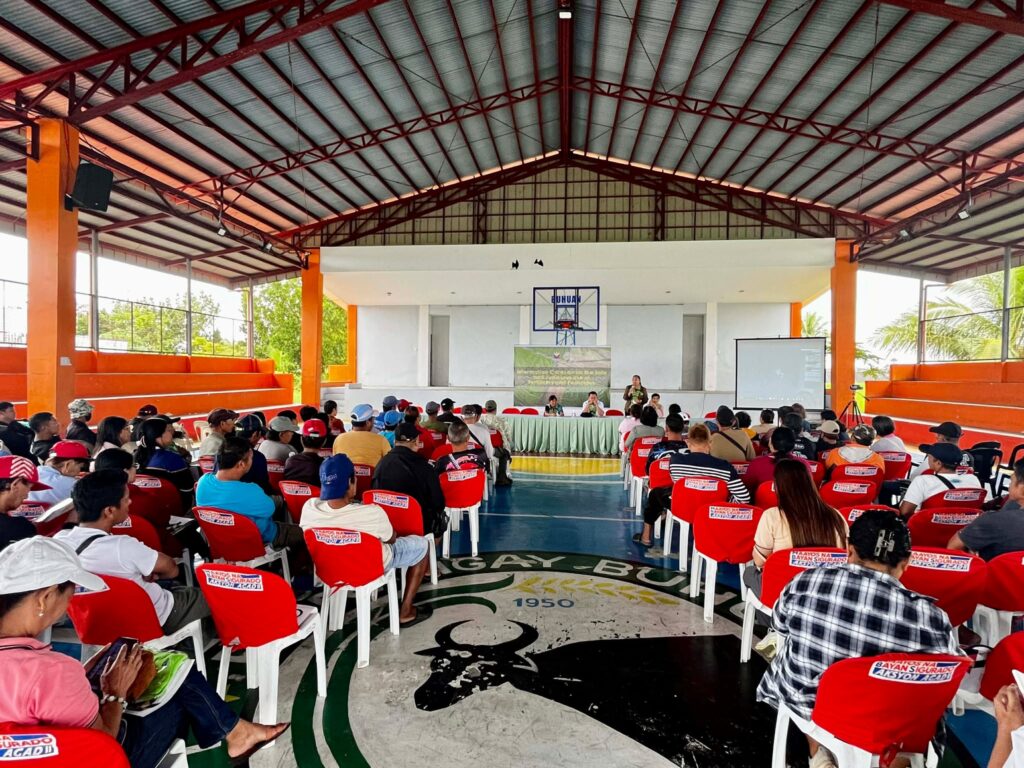
Oriental Mindoro | February 13, 2026 — The Fertilizer and Pesticide Authority (FPA), through its Regional Field Unit IV (CALABARZON-MIMAROPA), conducted a two-day information caravan on the safe and responsible use of fertilizers and pesticides on February 11–12, 2026, in Calapan City and Naujan, Oriental Mindoro. The activity gathered approximately 300 participants, including farmers, agricultural extension workers, local officials, partner institutions, and other stakeholders.
The first leg was held on February 11 in Calapan City, followed by the second leg on February 12 in Naujan. Each session was attended by about 150 participants, reflecting strong local engagement and support for sustainable agricultural practices.
The caravan was organized in coordination with local government units and the Department of Agriculture Regional Field Office IV-B. The initiative aimed to enhance farmer awareness of existing regulations and promote the safe, judicious, and responsible use of agricultural inputs.
Discussions focused on FPA rules and regulations under Presidential Decree No. 1144, which mandates the regulation of the manufacture, importation, distribution, and sale of fertilizers and pesticides in the Philippines. Technical sessions guided participants on proper handling, storage, application, and disposal of agricultural chemicals to protect human health and the environment.
An overview of government initiatives under the rice sector was also presented. Representatives of the Department of Agriculture–Rice Program discussed the Masagana Rice Industry Development Program, highlighting ongoing efforts to improve productivity, strengthen support services, and enhance farmer livelihoods.
Partner institutions provided practical guidance on the proper use of fertilizers and pesticides, emphasizing that compliance with FPA regulations helps improve crop yield, prevent environmental damage, and safeguard communities from the risks of counterfeit and unregistered products.
Local officials from Calapan City and Naujan expressed their support for the initiative and underscored the importance of sustained education and coordination among government agencies, farmers, and industry stakeholders.
The strong participation in both municipalities demonstrates Oriental Mindoro’s commitment to advancing safe, efficient, and sustainable farming practices. Through Information Caravans and similar outreach activities, the Fertilizer and Pesticide Authority continues to fulfill its mandate to regulate agricultural inputs while equipping farmers with the knowledge needed to make informed and responsible decisions.
##
|
Writers: Dana Kathrine L. Buhat & Suzettie M. Alcaide
_________________________________________________________
Fertilizer and Pesticide Authority (FPA) Online ISSN: 2815-1674
Published by the FPA Information and Communications Team -
FPA Memorandum Circular No. 2026-05
Interim procedures on the endorsement of fertilizer samples beyond FPA capability