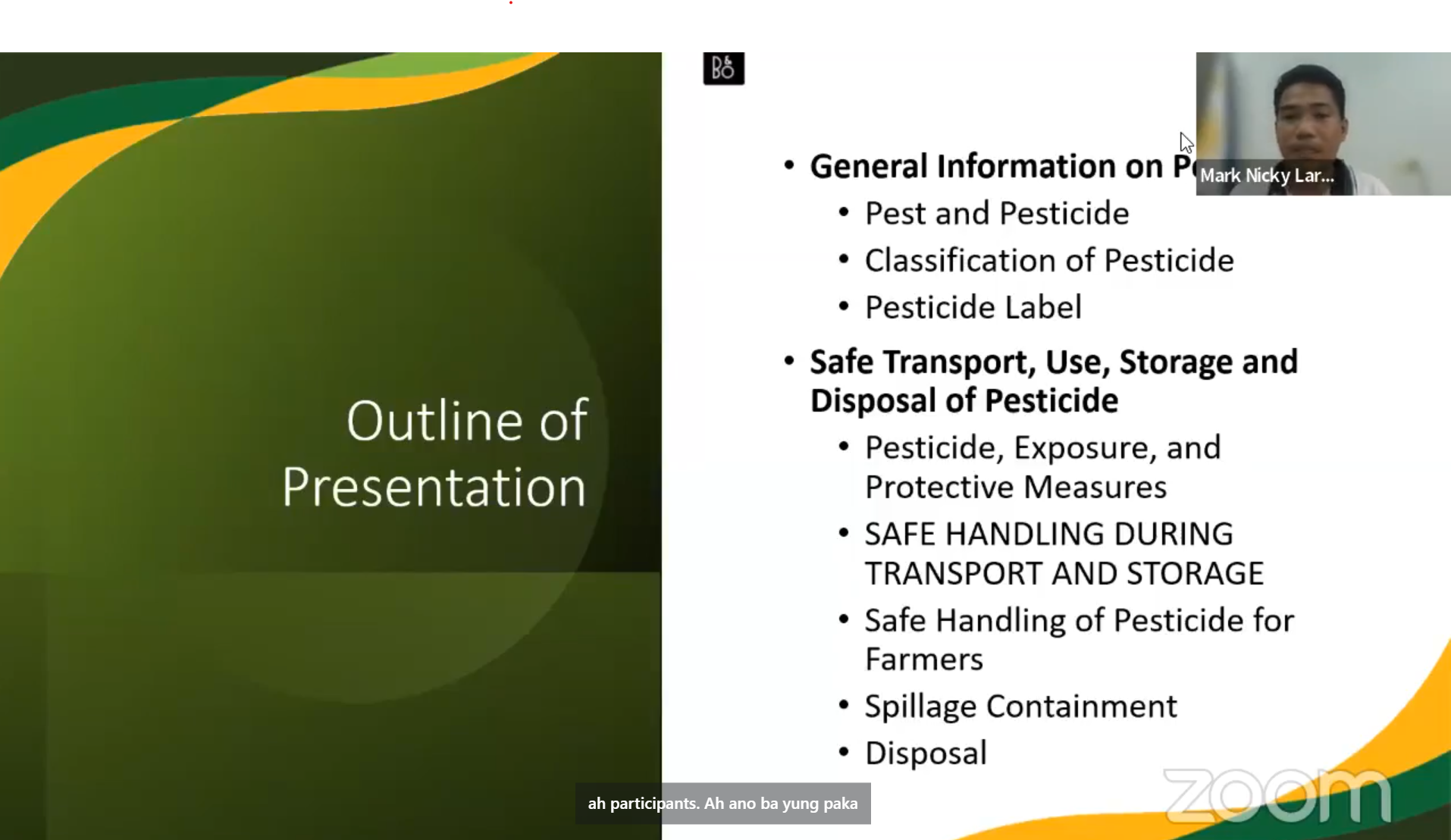
October 29, 2024 | Quezon City – As part of its commitment to promoting food safety, the Fertilizer and Pesticide Authority (FPA), in collaboration with the Department of Agriculture – Food Safety Focal Group, held a webinar titled “Safe and Judicious Use of Pesticides” on October 28, 2024. The online event, conducted via Zoom, aimed to raise awareness of pesticide safety as a critical component of the national food safety strategy.
This year’s theme, “Pagkain Ligtas at Sapat: Kaagapay sa Maunlad at Matatag na Bagong Pilipinas,” underscores the collective action of the government to create safe, sustainable, and resilient food systems for a stronger and more prosperous nation.
In her opening remarks, FPA Director Lansagan highlighted the significance of safe and nutritious food: “The importance of having safe, healthful food on our tables cannot be overstated. It fuels our productivity and overall well-being, crucial for national progress. As one of the country’s Food Safety Regulatory Agencies (FSRAs), FPA is committed to ensuring that agricultural inputs meet safety and quality standards.”
She highlighted that FPA plays a critical role in the implementation of RA 10611 or the ‘Food Safety Act of 2013’, particularly in maintaining a farm-to-fork food safety regulatory system that ensures a high level of food safety, promotes fair trade, and advances global competitiveness of Philippine foods and food products.
The webinar featured Regional Officer Mr. Mark Nicky Larga, who presented key pesticide handling, application, and disposal practices to promote the safe and responsible use of these agricultural inputs.
Food Safety Awareness Week is celebrated every last week of October as per Presidential Proclamation No. 160, series of 1999. It recognizes “a need for continuous education on food safety to achieve the goal of eradicating food poisoning and other foodborne illness.”
80 participants from various regions attended the recently held webinar.. ###
ICTSadmin
|
Fertilizer and Pesticide Authority (FPA) Online ISSN: 2815-1674 Published by the FPA Information and Communications Team
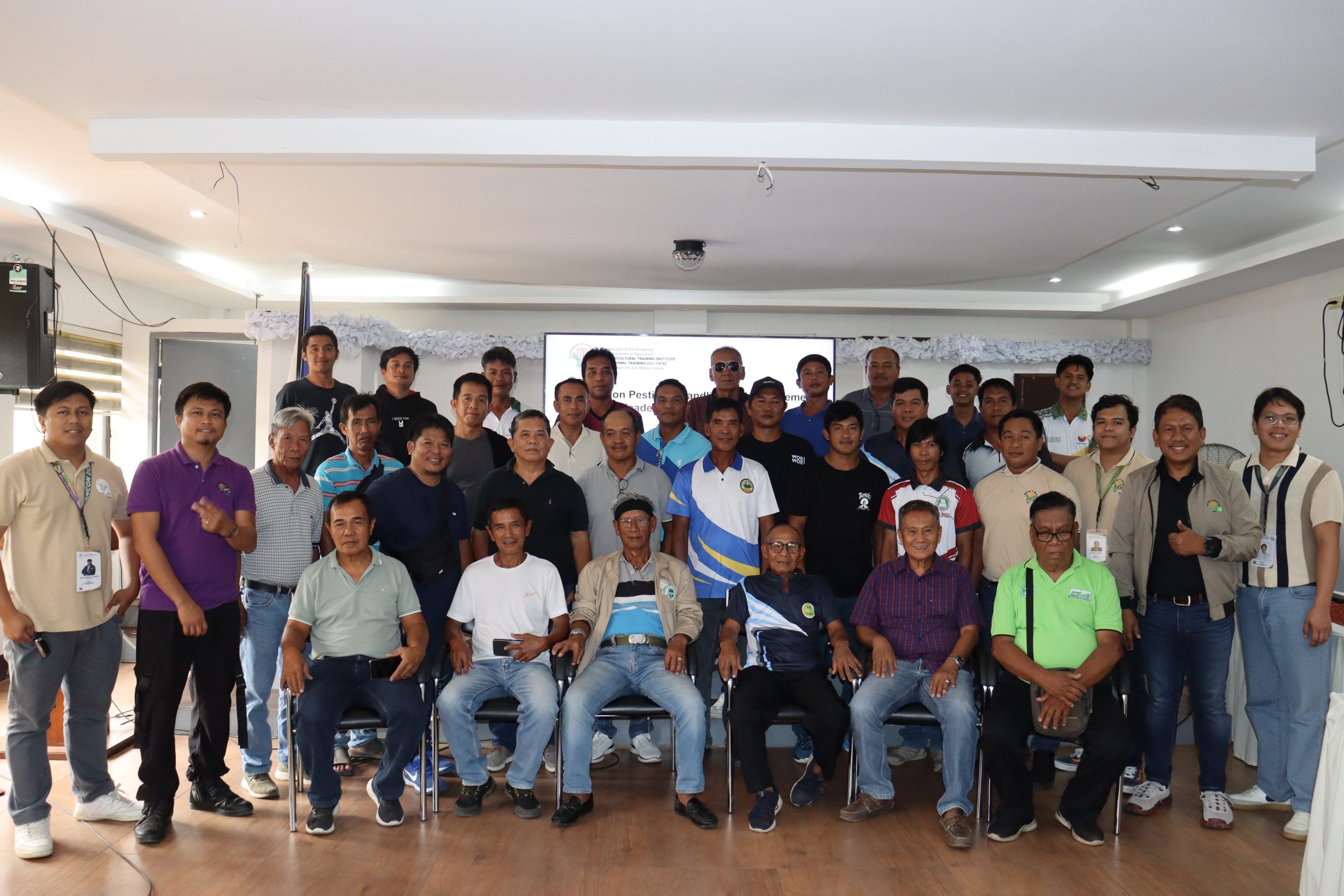
Camarines Sur | October 22, 2024 — In response to a recent pesticide poisoning incident, the Fertilizer and Pesticide Authority (FPA)—Bicol, in collaboration with the Department of Agriculture—Regional Field Office 5 (DA-RFO5) and local government units, conducted Pesticide Safe Use Training for farmers in Barangay Buluang, Baao, and Barangay Santicon, Polangui, on October 17-18, 2024.
The training, which aimed to prevent future incidents and promote the responsible use of pesticides, equipped farmers with essential knowledge on the safe handling, storage, and application of these chemicals. Key topics covered included the management of pesticide poisoning, the correct interpretation of product labels, and the critical importance of purchasing only FPA-registered products. Ninety farmers appreciated the practical insights, recognizing the training’s role in safeguarding their health and enhancing their farming practices.
Regional Officer (RO) Mr. Gabriel B. Atole stressed the importance of proper pesticide use, highlighting that while these chemicals are vital for crop protection, they pose significant health risks when mishandled. He reminded the farmers that pesticides are inherently hazardous and must be used carefully to avoid harmful exposure.
Prior to the training, on October 15-16, 2024, FPA-Bicol conducted the Accredited Safety Dispenser (ASD) training in Pili, Camarines Sur, attended by 30 participants from Camarines Sur, Camarines Norte, and Albay.
Engr. Christopher M. Nuñez, FPA Provincial Officer of Camarines Sur, welcomed the participants and emphasized the importance of safety and regulatory compliance in agricultural practices. RO Atole further explained that accredited safety dispensers are crucial in maintaining the integrity of fertilizer and pesticide distribution, ensuring that products are handled and applied following FPA standards.
These training initiatives are part of FPA’s ongoing commitment to promoting agricultural safety and are expected to significantly enhance the protection of farmers and their communities in the Bicol region. Mr. Victor Cortez, Agriculturist II of the Baao Municipal Agriculture Office, expressed his gratitude for the comprehensive training.
The training team consisted of Regional Officer Mr. Gabriel B. Atole, FPA-Albay Provincial Officer Mr. Winsor L. Nueva, FPA-Camarines Sur I, and Catanduanes Provincial Officer Engr. Christopher M. Nuñez, FPA-Camarines Sur II Provincial Officer Ms. Rosie T. Malazar, FPA-Sorsogon Provincial Officer Engr. Ardon Ryan E. Nee-Estuye, and FPA-Masbate Provincial Officer Mr. Rodny P. Conda. ###
Written by: Gabriel B. Atole
ICTSadmin
|
Fertilizer and Pesticide Authority (FPA) Online ISSN: 2815-1674 Published by the FPA Information and Communications Team
September 04, 2024 | Quezon City – The Fertilizer and Pesticide Authority (FPA) maintained its ISO 9001:2015 Quality Management System (QMS) following the re-certification audit conducted at the FPA Central Office in Quezon City on August 20, 2024 by the certifying body, TUV Rheinland Philippines, Inc.
The audit team led by Mr. Hilario J. Capili along with the members including Ms. Cecilia Ignacio and Mr. Melchor Camina. They reviewed and assessed the various services for the issuances of licenses, registrations, and permits related to fertilizer, pesticide, and other agricultural chemicals.
During the re-certification audit, support processes were also assessed, including the top management, internal audit, purchasing, human resource management and development, laboratory analysis for fertilizer and pesticide products, accreditation and IT-related services.
During the closing meeting, the audit team highlighted positive findings and opportunities for improvement, noting that there were NO major or minor non-conformities.
Under the leadership of Executive Director Julieta B. Lansangan, efforts of the agency for the recertification was spearheaded by the FPA Quality Management Committee and its Support Teams.
The successful re-certification reaffirmed FPA’s commitment to providing its customers with quality services aligned with international standards. ###
ICTSadmin
|
Fertilizer and Pesticide Authority (FPA) Online ISSN: 2815-1674 Published by the FPA Information and Communications Team
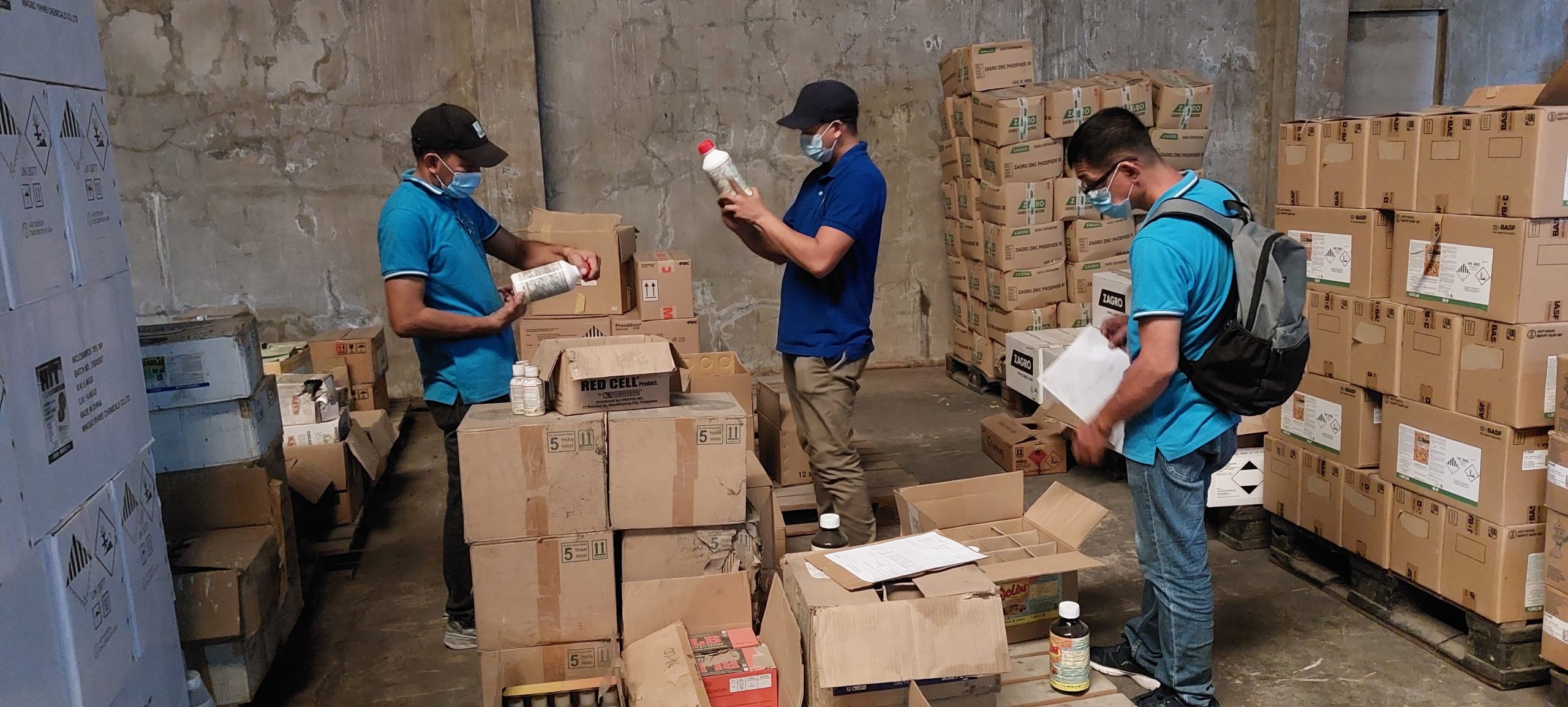
July 23-26, 2024 | Camarines Sur – Thirty-two (32) fertilizer and pesticide handlers were inspected during the Clean-Up Drive (CUD) operations in the third district of Camarines Sur from July 23-26, 2024.
Out of the 32 handlers, 19 unlicensed handlers received Notice of Violations (NoVs) and were required to attend the Accredited Safety Dispenser (ASD) training as part of the requirements to secure a license. A written report on the summary of expired fertilizer and pesticide products was submitted to the FPA Central Office for the recall of the concerned companies.
Additionally, one establishment was given a Stop Sale, Stop Use, Stop Move, and Hold (SUMS) order for selling unregistered products. The findings were submitted to the Field Operations Coordinating Unit (FOCU) for appropriate action.
Meanwhile, 12 handlers were found to be compliant with FPA rules and regulations and are commended and encouraged to regularly check the labels to ensure the legitimacy and quality of the agricultural products.
The team was headed by Regional Officer Mr. Gabriel B. Atole, together with Provincial Officers Engr. Christopher M. Nuñez, Ms. Rosie T. Malazar, Engr. Cris L. Legaspi, Mr. Winsor L. Nueva, Mr. Rodny P. Conda, and Engr. Ardon Ryan E. Nee-Estuye. ####
Written by: Christopher M. Nuñez
ICTSadmin
|
Fertilizer and Pesticide Authority (FPA) Online ISSN: 2815-1674 Published by the FPA Information and Communications Team
July 22, 2024 | Quezon City – The Fertilizer and Pesticide Authority (FPA) conducted its Midyear Performance Review and Assessment with the theme “Improving Outcomes through Strategic Evaluation and Insight Collection” on July 16-18, 2024, at the FPA Bldg., BAI Compound, Visayas Ave., Diliman, Quezon City.
The event aimed to evaluate the agency’s performance during the first semester and propose catch-up plans to accomplish targeted activities within FY 2024.
“Let us all be reminded that the outcome of this activity is instrumental on our strategy as we go to the last half of the year. I hope that whatever deficiencies and lapses we encounter in the first semester, we learn from them and use them to our advantage,” Dir. Julieta Lansangan said during her opening remarks.
As of June 30, 2024, the agency issued 12,211 regulatory documents (including product registrations, permits, certifications, and licenses), of which 11,454 (93.80%) were issued within the specified timeframe. The FPA also visited 11,493 fertilizer and pesticide handlers, monitored 76,180 fertilizer and pesticide products, and issued 358 Notices of Violations (NoVs) and Stop Use, Move, Sale (SUMS) orders.
On financial accomplishments, the agency obligated Php108 million, with Php63 million allocated for personnel services and Php45 million for maintenance and other operating expenses.
Other activities included presenting the FY 2025 DBM-approved budget level, SPMS-DPCR Rating for the 1st and 2nd Semesters of 2023 and discussing the review of target physical indicators.“This activity provides the FPA with an opportunity to thoroughly assess its performance by evaluating program and activity outcomes, analyzing organizational strengths and weaknesses, and identifying areas for improvement. Ultimately, this promotes a strategic approach to enhancing organizational effectiveness and development,” Ms. Oliveros, head of the Planning, Management and Information Division (PMID) said. ###
Writer: Information Section
ICTSadmin
|
Fertilizer and Pesticide Authority (FPA) Online ISSN: 2815-1674 Published by the FPA Information and Communications Team
LEGAZPI CITY, ALBAY | June 27, 2024 – The Fertilizer and Pesticide Authority (FPA) Bicol discussed the safe and judicious use of agricultural inputs and the promotion of the Balanced Fertilization Strategy (BFS) during the rice season-long training on the production of high-quality inbred rice, seed certification, and farm mechanization at Good Grass Farm, Happy Homes Subdivision, Brgy. Pawa, Legazpi City, from June 12-27, 2024.
The training, organized by the Agricultural Training Institute (ATI) as part of the Rice Extension Services Program (RESP) under the Rice Competitiveness Enhancement Fund (RCEF), aims to enhance the knowledge, attitudes, skills, and practices of RCEF beneficiaries.
Regional Officer (RO) Mr. Gabriel Atole covered topics such as soil health, fertilizer application, plant growth promoters, and BFS. He emphasized that adopting BFS could reduce dependency on inorganic fertilizers.
Meanwhile, Provincial Officers (POs) Mr. Rodny P. Conda and Engr. Christopher M. Nuñez provided detailed insights into pesticides, including information on their labels, safe handling practices, potential chemical hazards, and methods to prevent pesticide poisoning. They underscored the critical importance of proper pesticide handling to avoid poisoning incidents.
Farmers were advised to purchase registered fertilizer and pesticide products from FPA-licensed dealers only. They were also warned about the potential presence of counterfeit and off-specification fertilizers. In case of doubt about their purchased products, farmers were encouraged to contact the assigned Provincial Officer in their area or visit the FPA Region V Facebook page and the FPA website.
A total of 152 farmers from various barangays in Sto. Domingo and Bacacay, Albay attended the training. ###
Written by: Gabriel B. Atole
ICTSadmin
|
Fertilizer and Pesticide Authority (FPA) Online ISSN: 2815-1674 Published by the FPA Information and Communications Team
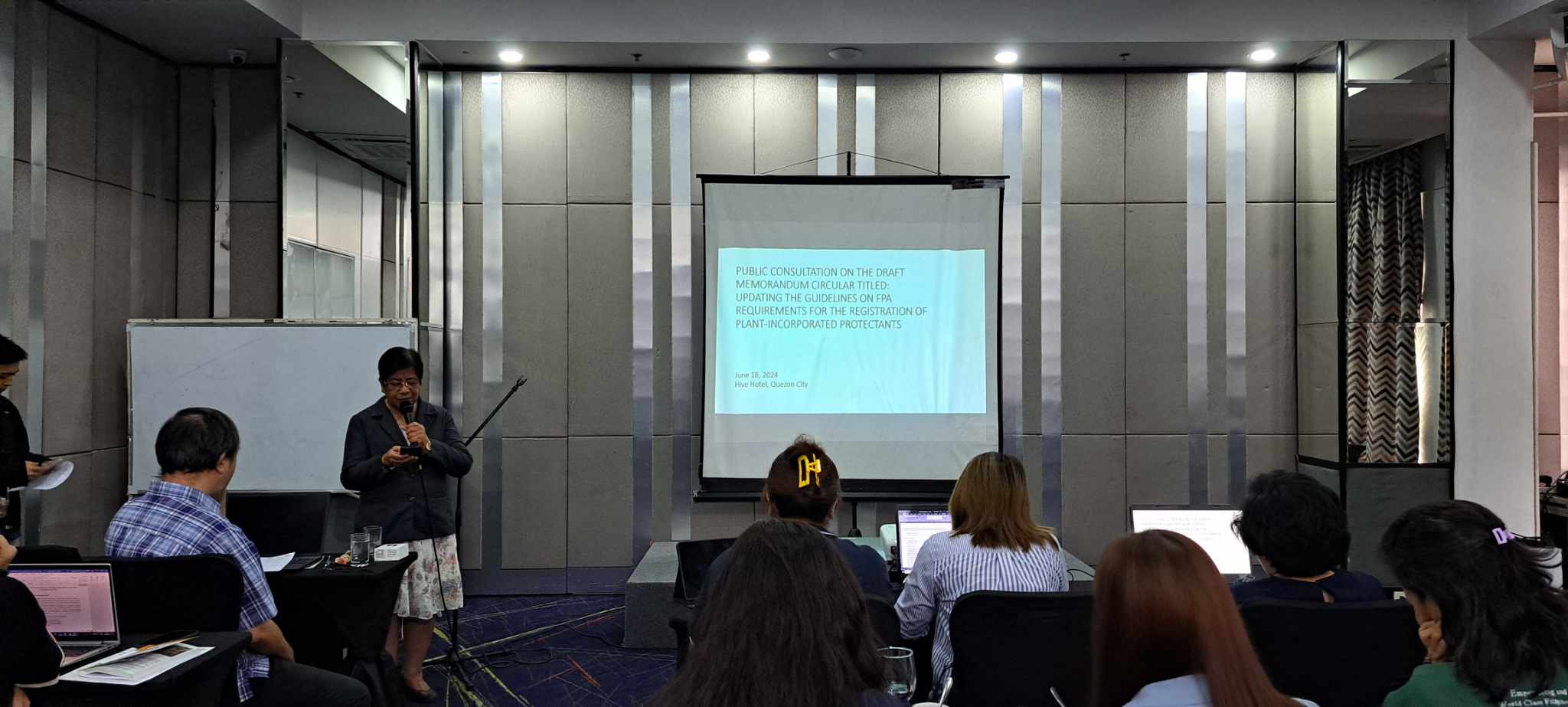
June 18, 2024 | Quezon City – The Fertilizer and Pesticide Authority, spearheaded by the Pesticide Regulations Division, conducted stakeholder consultation on the proposed Memorandum Circular (MC) for the Registration of Plant-Incorporated Protectants (PIP) on June 18, 2024, atCosmos Hall, 2F, Hive Hotel, 68 Scout Tuazon St., Diliman, Quezon City.
“This initiative of developing our existing policy on PIPs was borne out from the DOST-DA-DENR-DOH-DILG Joint Department Circular No. 01 series of 2021, which governs the use of genetically modified plants and plant products derived from modern biotechnology,” Dir. Lansangan said during her opening remarks.
“As one of the regulatory agencies tasked in the said Circular, we have the responsibility to develop a sound set of rules that will further strengthen and support our national policy on biosafety and biotechnology,” she added.
Meanwhile, Ms. Querijero, Chief of the Pesticide Regulations Division, highlighted the importance of updating the guidelines.
She said that updating the guidelines on the Registration of Plant-Incorporated Protectants (PIP) is necessary to ensure consistency across regulatory frameworks which leads to a more streamlined and efficient regulatory process for stakeholders.
“PIPs are part of modern agricultural biotechnology aimed at sustainable pest management. Aligning guidelines ensures that regulatory approaches keep pace with scientific advancements and provide a cohesive framework for evaluating new technologies,” Kris Minguez, Chemist IV at the PRD, explained.
31 participants from various organizations, including the Bureau of Plant Industry (BPI), Department of Science and Technology (DOST), Philippine Fiber Industry Development Authority (PhilFIDA), CropLife Philippines, and pesticide companies, attended the public consultation.
The feedback collected during the consultation will be reviewed for the revision of the Memorandum Circular, which is expected to be released to the public before the end of 2024.###
Written by: Pesticide Regulations Division
ICTSadmin
|
Fertilizer and Pesticide Authority (FPA) Online ISSN: 2815-1674 Published by the FPA Information and Communications Team
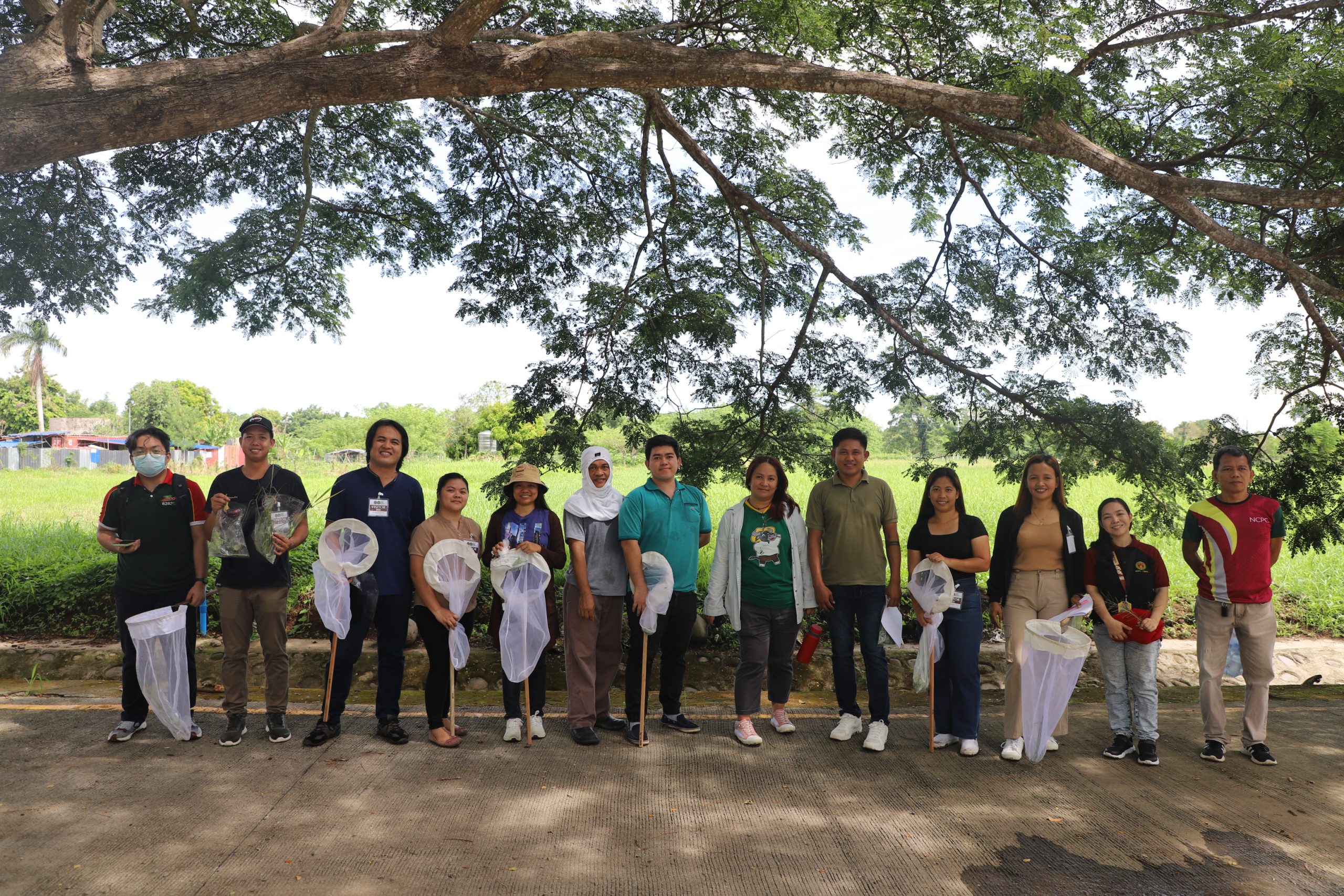
June 26, 2024 | Los Baños, Laguna – The Fertilizer and Pesticide Authority (FPA) Bicol participated in a Refresher Course conducted via zoom on June 10-14, 2024, and a field tour on June 18, 2024, at UP Los Baños, Laguna.
The course entitled “Identification and Management of Pests and Diseases in Cereal Crops, Vegetables, and Mango in the Philippines” aimed to refresh and capacitate agriculturists in identifying pests, diagnosing problems using traditional and modern methods, understanding the importance of pest management, acquiring knowledge of pesticide management, making informed recommendations, and enhancing applied technology skills in pest management.
Further, the participants attended an on-site field tour on June 18, 2024, at NCPC-UP Los Baños, Laguna. The activity involved identifying actual pests and diseases in mango, rice, sugarcane, eggplant, squash, okra, and sitao. They also toured the Molecular and Mycology Laboratory, Plant Health Clinic, and Precision Crop Protection Laboratory.
Mr. Gabriel Atole, Mr. Rodny Conda, Mr. Winsor Nueva, and Ms. Rosie T. Malazar attended the refresher course.
The National Crop Protection Center (NCPC) conducted the activity and expressed gratitude to FPA Bicol for its active participation. ###
Written by: Gabriel B. Atole
ICTSadmin
|
Fertilizer and Pesticide Authority (FPA) Online ISSN: 2815-1674 Published by the FPA Information and Communications Team
Standing firm on its mandate to assure the agricultural sector of quality fertilizers, the Fertilizer and Pesticide Authority (FPA) reiterates industry compliance and renewed commitment relative to the implementation of existing national policies governing the agricultural sector.
Under Section 8.3 of the Fertilizer Regulatory Policies and Implementing Guidelines, a policy developed through the collaboration of FPA and the Fertilizer Industry Association of the Philippines (FIAP), a standard of 50 kg net weight of fertilizers was established to ensure end-users are buying the right quantity all the time. This position was reiterated through Memorandum No. 92-01.
Alongside complaints from farmers on the fertilizer price hike since 2021, the agency also received reports about ‘underweight’ fertilizer sacks that fall short from 100 grams [to even four kilograms] against the specified standard quantity. To verify such incidents, the FPA initiated the conduct of random fertilizer weight monitoring in the 14 Regions from January 30 to 7 June 2024.
The monitoring activity aims to explore the root causes of underweight packaging and its implications for distributors, dealers/retailers, and farmers and fishers. Moreover, it will address the key policy issue of “whether or not farmers and fishers are using the right amount of fertilizer” or “if the handlers adhere to the standard weight of fertilizers.”
The findings will provide insights and propose recommendations to abate the slated issue, including strengthening enforcement mechanisms, implementing quality control measures, and raising awareness about adherence to standard weights for a fair and sustainable fertilizer market.
Thirty-two (32) fertilizer grades were purposively random sampled from twenty-two (22) fertilizer importing companies, and four local blended/manufacturer companies involving 58 distributors and 65 dealers/retailers. The grades were selected based on their physical attributes including meeting the requirement of 50kg net capacity indicated in sacks.
Findings revealed that of the 17,602 sacks appraised, 49.17% (8,655 sacks) were found underweight from the 50kg net throughout the 14 regions involving 35 provinces, 54 municipalities, and 22 cities. The most recorded underweight is in CAR (77.62%) followed by Regions 12 (68.94%), 13 (68.54%), 4 (67.96%), 1 (64.95%), 9 (57.65%), 2 (49.17%), 11 (40.18%), 6 (39.38%), 10 (38.93%), 7 (30.29%) while the least was in Regions 3 (25.48%), 5 (23.91%) and 8 (23.10%).
The total % average of underweight is 49.17% as shown in Table 1. For each grade, above 50% underweight are the following: 0-22-0 (65%) followed by 21-0-0 (58.65%), 15-9-20 (57.93%), 15.5-0-0 (53.33%), 46-0-0 (52.07%), 14-14-14 (52.05%), 16-20-0 at 50.65%. Fertilizer grades from 30% to 40% underweight are 15.4-0-0 CaO=25.6, B=0.3 (46.84%), 19-1.1-6.5 (46.67%), 0-0-60 (45.68%), 16-16-16 (42.72%), 25-0-0 (42.69%), 18-46-0 (34.24%), 4-14-0 (33.33%), 2-0-0 (31-11%), and 4-2-2 (30%).
Likewise, underweight grades which range from 10%-20% are the following: 15.5-0-0, Ca=18.8 (8.57%), 18-6-0.2 (24%), 17-7-17 (20.88%), 17-0-17 (17.38%), 19-1.1-6.5 (16%), 0-0-50 (12%), and 10-10-10 (12%). At the same time, grades under 10% are 19-4-19 (8.20%), 12-12-17 (8%), and 45.8-0-0 (6.67%). Moreover, 6 fertilizer grades had no underweight sacks specifically 0-0-61, 0-24-0, 13-11-21, 15.5-0-0 CaO=26.5, 15-5-15, and 8-8-8+MgO.
Table 1. Summary of Fertilizer Grades
No.
Fertilizer Grade
Total
Inventory (sacks)
Samples (sacks)
Underweight (sacks)
% Underweight
1
0-22-0
5,486
100
65
65.00
2
21-0-0
294,353
3,035
1,780
58.65
3
15-9-20
11,715
271
157
57.93
4
15.5-0-0
433
75
40
53.33
5
46-0-0
528,664
4,056
2,112
52.07
6
14-14-14
348,506
3,414
1,777
52.05
7
16-20-0
189,573
2,628
1,331
50.65
8
15.4-0-0, CaO=25.6, B=0.3
13,916
190
89
46.84
9
19-1.1-6.5
64
15
7
46.67
10
0-0-60
350,578
1,561
713
45.68
11
16-16-16
2,542
206
88
42.72
12
25-0-0
17,131
260
111
42.69
13
18-46-0
42,454
479
164
34.24
14
4-14-0
3,422
45
15
33.33
15
2-0-0
1,708
45
14
31.11
16
4-2-2
10
10
3
30.00
17
15.5-0-0, Ca=18.8
54,177
154
44
28.57
18
18-6-0.2
2,269
50
12
24.00
19
17-7-17
532
91
19
20.88
20
17-0-17
18,143
443
77
17.38
21
19-1.1-6.5
1,102
50
8
16.00
22
0-0-50
1,800
50
6
12.00
23
10-10-10
5,003
50
6
12.00
24
19-4-19
31,042
122
10
8.20
25
12-12-17
1,751
75
6
8.00
26
45.8-0-0
1,055
15
1
6.67
27
0-0-61
25
5
0
0
28
0-24-0
50
25
0
0
29
13-11-21
1,195
5
0
0
30
15.5-0-0 CaO=26.5
1,812
35
0
0
31
15-5-15
344
37
0
0
32
8-8-8+3 MgO
23
5
0
0
Total
1,930,878
17,602
8,655
49.17
In protecting the rights and welfare of farmers and fishers, the FPA believes that the persistence of the status quo will compromise the attainment of food security in the country. Application of underweight fertilizers poses negative implications for the value of money, nutrient deficiency on fertilizer recommendation for achieving optimum yield, and loss of income by distributors, and dealers/retailers including the loss of government funds for farmers’ subsidy on fertilizers.
Towards the end, farmers and fishers, who play a crucial role as backbone of country’s food security, deserve proper treatment by providing what is due to them — right quantity of fertilizer bags. The FPA thus urges all industry players involved in the distribution line – from importers, distributors to dealers, to adhere to regulatory standards.
Moving Forward
In a decisive action to promote sustained efforts among concerned authorities and the industry, the following must be realized:
Policy Direction
FPA, as the mandated authority, must ensure that the consumer or the farmer is supplied with fertilizers of standard quantity through issuance of laws and policies regulating the manufacture and sale of various fertilizers.
The Fertilizer Control Act (FCA) should be in place and keep a strict watch in the quantity control of fertilizers, therefore players involved in the fertilizer business either as importers, manufacturers, distributors, dealers/retailers, or salespersons, shall have the proper knowledge to avoid infringement of government regulations.
Institutionalize a `Border Control´ system where port entry of fertilizers is operated by importers.
The government through the House of Representatives must pass legislation to sanction and penalize companies whose practices does not conform to regulatory standards.
Other direct effects of underweight fertilizers
The bagging and re-bagging system by importers and local blenders should be improved through the use of state-of-the-art equipment by shifting from a mechanical weighing scale method (i.e. Lose weight type scale) to a digital weighting method (i.e. 50kg sack automatic weighing bagging filling scale). Digital scales are more accurate and precise than mechanical scales.
The weight of fertilizer with sack should be 50.2kg to meet the required 50kg net content and to augment spillage.
Improvement in the stitching of 50kg net sacks through double folding before sewing to avoid spillage during logistics.
For dealers/retailers, before re-bagging into smaller packs (i.e. 1kg – 5 kg), get hold of the 50.2kg gross weight to ensure a 50kg net to avoid income shortfall.
###
Written by: Myer G. Mula, Kathleen Faye B. Agonoy, and Edward Allen A. Calapatia
ICTSadmin
|
Fertilizer and Pesticide Authority (FPA) Online ISSN: 2815-1674 Published by the FPA Information and Communications Team
June 14, 2024 | Quezon City – In gearing up for its ISO 9001:2015 Quality Management System (QMS) recertification, the Fertilizer and Pesticide Authority (FPA) conducted an Internal Quality Audit (IQA) Training Workshop at the FPA Building, BAI Compound, Visayas Avenue, Diliman, Quezon City, from June 13-14, 2024.
The training aimed to deepen the internal quality auditors’ understanding of ISO 9001:2015 requirements and build their capability to conduct internal quality auditing. Engr. Henry Palaca, a renowned quality management system consultant and President of Quality Plus Management Consulting Co., serves as the workshop facilitator.
The training comprehensively covered key aspects, including understanding the internal auditing process, the complete audit cycle, and the tips necessary towards achieving a successful quality audit.
Participants actively engaged in practical exercises and case studies to effectively apply the principles in conducting impactful internal quality audits that directly benefit process owners.
The participants also conducted a practical internal audit during the workshop, allowing them to apply the theoretical knowledge acquired to practical scenarios.
Dir. Julieta B. Lansangan, during her opening remarks, emphasized that internal audits promote accountability within our Agency, which keeps its workforce to be guided in performing their duties well and making the right decisions in the spirit of public service and good governance.
“The training will provide participants with practical insights and serve as a catalyst for continuous improvement, offering valuable feedback to enhance their skills and approaches in auditing practices,” she added. ###
Written by: Information Section
ICTSadmin
|
Fertilizer and Pesticide Authority (FPA) Online ISSN: 2815-1674 Published by the FPA Information and Communications Team