Category: Articles

  • FPA supervisors train on performance monitoring and coaching

    FPA supervisors train on performance monitoring and coaching

    QUEZON CITY, February 23, 2022 – In coordination with the Civil Service Commission (CSC), the Fertilizer and Pesticide Authority (FPA) capacitates its supervisory officers for improved management of subordinates in a virtual orientation on performance monitoring and coaching held on February 17 to 18, 2022.


    The workshop is part of the Learning and Development Program of FPA for the year to improve leadership and coaching skills of supervisors to improve the productivity of their staff.


    “True leaders create more leaders,” Deputy Executive Director Eric Divinagracia shared. He added, “Leadership is an action, not a position.”


    The resource speaker, Director Fe Lacaba of the Civil Service Commission, imparted the effective monitoring tools and coaching approaches. The participants were able to apply their learnings through a role-playing activity.


    She ended her lecture with an advice on effective coaching: “Remember the GROW approach. Set a Goal, but make sure to look deep into the Reality of your subordinates. Develop several Options to address the problem and help them find a Way forward.

    Written by: Maria Theresa B. Oliveros | Published: 3 March 2022

      Fertilizer and Pesticide Authority (FPA) Online ISSN: 2815-1674
      Published by the FPA Information and Communications Team

  • FPA Operations Manual published

    FPA Operations Manual published

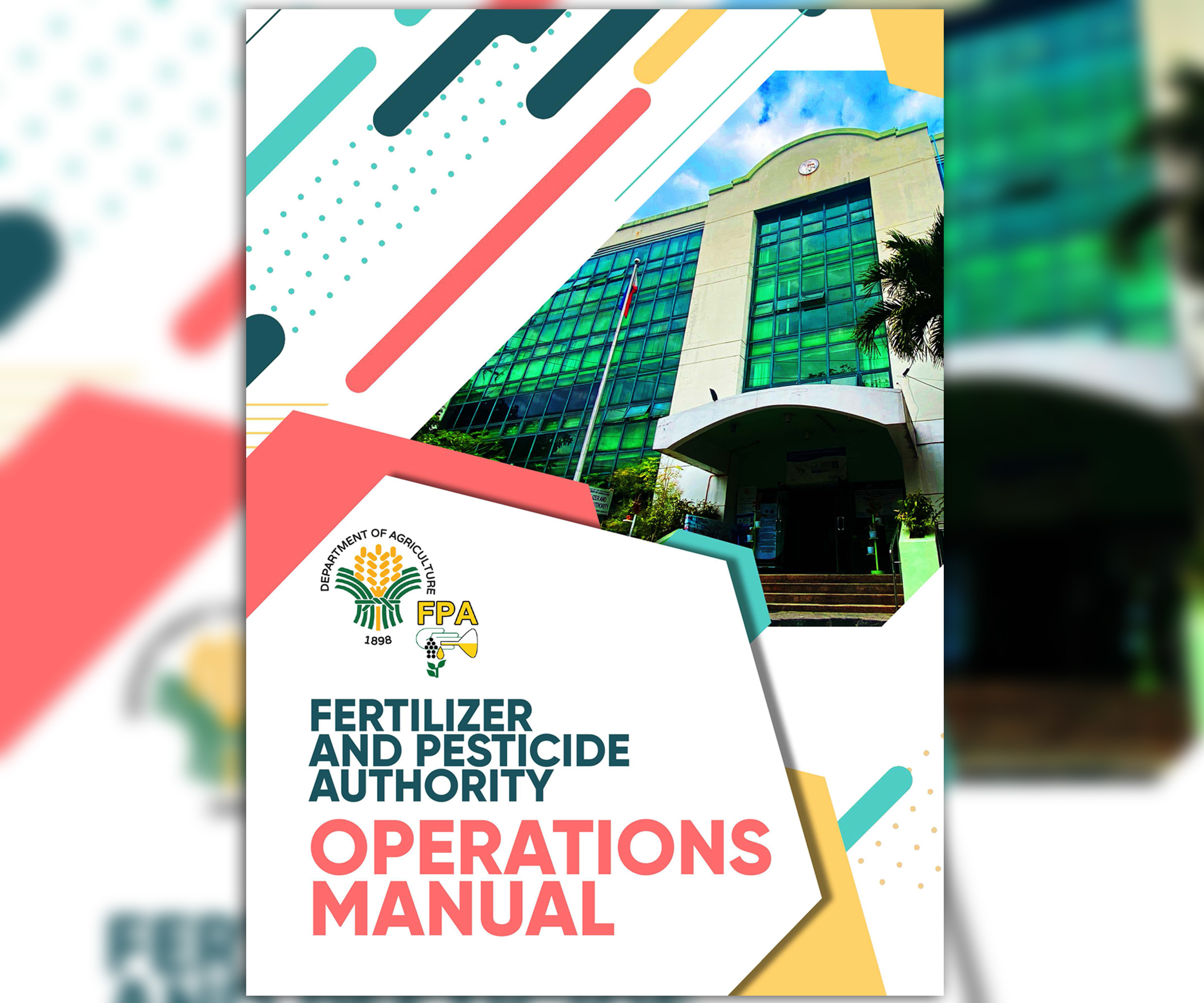
    QUEZON CITY, March 1, 2022 – The Operations Manual of the Fertilizer Pesticide Authority has finally been published today. It was submitted to Department of Agriculture (DA) Secretary William D. Dar and Undersecretary Roldan G. Gorgonio for Administration and Finance on February 28 in compliance with their directives.


    The Operations Manual (OM) sets forth the standard operating procedures in the issuance of license, registrations and permits for fertilizer, pesticide, and other agricultural chemicals. This is the culmination of the strategic decision of FPA to integrate the Citizen’s Charter and the Quality Manual into this document allowing FPA to have single point of reference to assess its operations and employees/staff performance.


    Executive Director Wilfredo C. Roldan is happy with the collaborative effort of FPA employees to come up with the OM. “Let me especially acknowledge Dr. Myer Mula for shepherding the production of the Manual and hopefully this will serve as a testament of our resolve to serve our stakeholders better, promote transparency and good governance”, Dir. Roldan said.


    Meanwhile, Dr. Mula, Deputy Executive Director for Fertilizer, ascribes the finalization of the Operations Manual to FPA’s commitment to empower the stakeholders in the fertilizer and pesticide industry. “This document shall bind the institution and the Filipino farmers and fishers to the brand of service that FPA delivers — to keep the industry safe, responsible, and pro-people.,” Dr. Mula stated.


    The OM is the product of two workshops whose objective is to update the existing Operations Manual which entailed a review of the internal operations of FPA, including the formulation of a Strategy Map and Balanced Scorecard. This was held on November 8-9 and November 15-16, 2021.


    Written by: Wendycharlene B. Almasen | Published: 2 March 2022

      Fertilizer and Pesticide Authority (FPA) Online ISSN: 2815-1674
      Published by the FPA Information and Communications Team

  • Department Circular No.1, Series of 2022 approved by Sec. Dar

    Department Circular No.1, Series of 2022 approved by Sec. Dar

    QUEZON CITY, February 21, 2022. The Fertilizer and Pesticide Authority (FPA) is mandated to register fertilizer products under Section 9 of Presidential Decree No. 1144 specific to fertilizers, which states that “No fertilizer, or other agricultural chemical shall be exported, imported, manufactured, formulated, stored distributed, sold or offered for sale, transported, delivered for transportation or used unless it has been duly registered with the FPA or covered by a numbered provisional permit issued by FPA for use in accordance with the conditions as stipulated in the permit. Separate registrations shall be required for each fertilizer grade.”


    Aligned with this mandate, Department Circular (DC) No. 1, Series of 2022 titled “General Guidelines on the Registration of New Fertilizer Products with Required Bioefficacy Trial and Mandatory Publication of the Bioefficacy Trial Terminal Report” provides the requirements and procedures for the registration of new fertilizer products and ensures that the registered products are compliant with the Implementing Rules and Regulations of Presidential Decree No. 1114, the FPA Regulatory Policies and Implementing Guidelines, and the Food Safety Act of 2013.


    The guidelines were developed and subjected to a review process with the purpose to further protect our farmers, consumers, and stakeholders.


    The DC was signed by Secretary Dar on February 16, 2022, and was published at the Official Gazette at the University of the Philippines Law Center, Diliman, Quezon City on February 18, 2022. Other provisions of the DC is to conduct the bioefficacy trial into two cropping seasons (wet and dry) and mandatory publication of the technical report either in scientific bulletins, or research journals by the government or private institutions or academes.


    The Circular shall take effect after fifteen (15) days following the complete publication in the Official Gazette and to archive with the National Administrative Register of the University of the Philippines Law Center. 

    Written by: Maribel M. Querijero | Published: 1 March 2022

      Fertilizer and Pesticide Authority (FPA) Online ISSN: 2815-1674
      Published by the FPA Information and Communications Team

  • FPA RFU X checks fertilizer imports in Cagayan de Oro

    FPA RFU X checks fertilizer imports in Cagayan de Oro

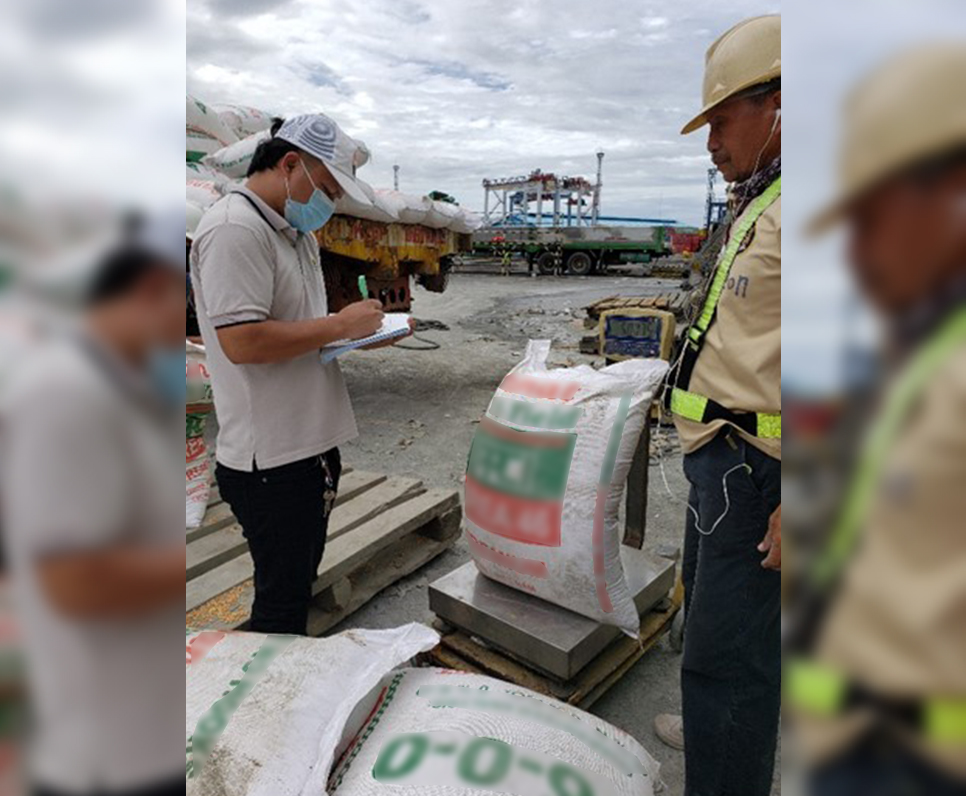
    CAGAYAN DE ORO, February 22, 2022 – The FPA Provincial Officer for Misamis Oriental, Romnick Boctot, verified 6,000 MT of urea (46-0-0) imports which arrived at Cagayan de Oro Port today. The Quality Grains and Feeds Corp., a FPA-registered fertilizer handler, imported it from Vietnam.


    Led by Supervising Agriculturist Sonia Calleja, The RFU X monitored the said activity to avoid mishandling and compromise the fertilizer quality. Upon inspection, the imports passed the standard weight measurement. Mr. Boctot also collected samples for confirmatory analysis to be done by Laboratory Services Division.


    The inspection was part of the relentless efforts of FPA to ensure the public of adequate supply of quality fertilizer.

    Written by: Romnick N. Boctot | Published: 28 February 2022

      Fertilizer and Pesticide Authority (FPA) Online ISSN: 2815-1674
      Published by the FPA Information and Communications Team

  • FPA-FRD ups fertilizer nutrient content standard, and pushes registration efficiency

    FPA-FRD ups fertilizer nutrient content standard, and pushes registration efficiency

    QUEZON CITY, February 24, 2022 – The Department of Agriculture (DA) – Fertilizer and Pesticide Authority (FPA) through the Fertilizer Regulations Division (FRD) called to increase fertilizer nutrient content for product registration and announced new policies to improve national and regional regulatory service processes.


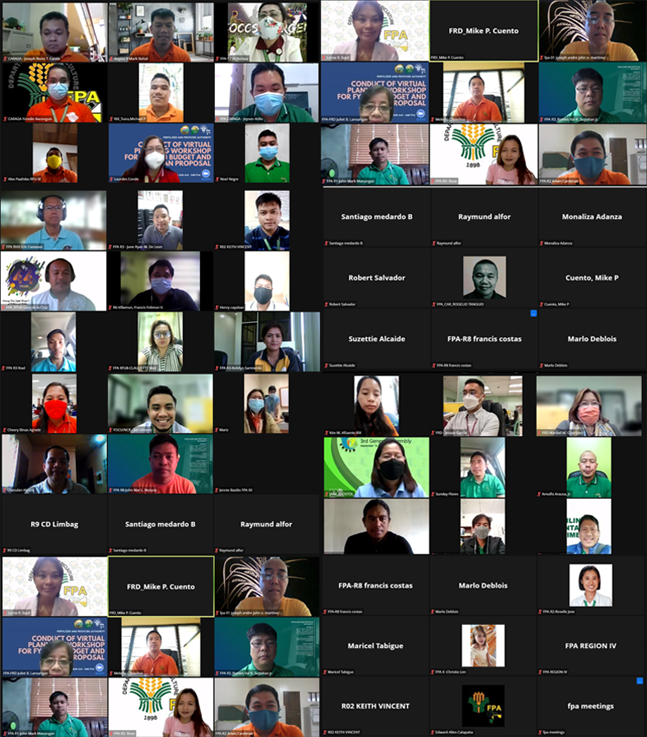
    In pursuit of continuous fertilizer product quality standard improvements, with the Agency’s regional units, Laboratory Services Division (LSD), and Field Operations Coordinating Unit (FOCU), the FRD spearheaded an online meeting to discuss updates on new policies and improve registration processes efficiency among its support units.


    Present in the online meeting was FRD Chief Julieta Lansangan along with other agriculturists from the FRD, regional and provincial field units, as well as representatives from the LSD and the FOCU held on February 16, 2022.


    Confirmatory analysis results from routine field monitoring activities of FPA regional units on registered fertilizer products show low results of total nitrogen, phosphorus, and potassium (NPK) content.  This translates to ineffective inputs for agricultural use, which is further corroborated by reports from Regions II and III by Regional Officers Leonardo Bangad and Val Suguitan, respectively, of substandard products being used by farmers.


    In response, Ms. Lansangan presented a proposal to implement a minimum standard for NPK content of both local and imported inorganic fertilizers.  This new requirement is seen to prevent substandard products from being registered by the FPA and used by the farmers.


    Further, the division discussed new policies on wastewater reuse certification for fertilizer, and the publishing of bioefficacy trial reports of products for registration, all of which are proposed amendments in the regulatory implementing guidelines.  The transfer of the issuance of wastewater reuse certification from the DA regional offices to FPA, in compliance with Department of Agriculture Administrative Order No. 11, Series of 2019 aims to provide better quality to our stakeholders in response to new research findings and recent developments. While the publishing of terminal reports to public or private journals will allow the public or other interested parties to evaluate the efficacy of the tested fertilizer products.


    To promote clients’ convenience and reduce the number of processes for laboratory analysis procedure of fertilizer samples in acquiring product licenses, LSD Chemist IV Mr. Angelo Bugarin suggested allowing clients to take samples directly to the laboratories. However, to secure the integrity of the samples, as a control measure, standardized packaging will be implemented.


    As for the FOCU, two new regulations aiming to standardize procedures for the field unit’s monitoring activities will be implemented. To promote transparency, a memorandum circular on placing price tags for fertilizer in Region 1 and the disposition of stop use, stop move, stop sale, and hold (SUMS) order will be put into action. 


    The Fertilizer Regulations Division is a vital unit of the FPA that is responsible for regulating the licensing of fertilizer handlers, the registration of fertilizer products, and the issuance of permits, according to PD 1144, for the improved quality of life for all Filipinos through increased farm incomes, productivity and food production using safe and appropriate fertilizers. 


    Sources: Julieta B. Lansangan, Chief, Fertilizer Regulations Division (FRD) FPA-FRD and RFU 

    Written by: Mark Kevin Salita | Published: 28 February 2022

      Fertilizer and Pesticide Authority (FPA) Online ISSN: 2815-1674
      Published by the FPA Information and Communications Team

  • DED Divinagracia speaks during the ASD training in Kidapawan City

    DED Divinagracia speaks during the ASD training in Kidapawan City

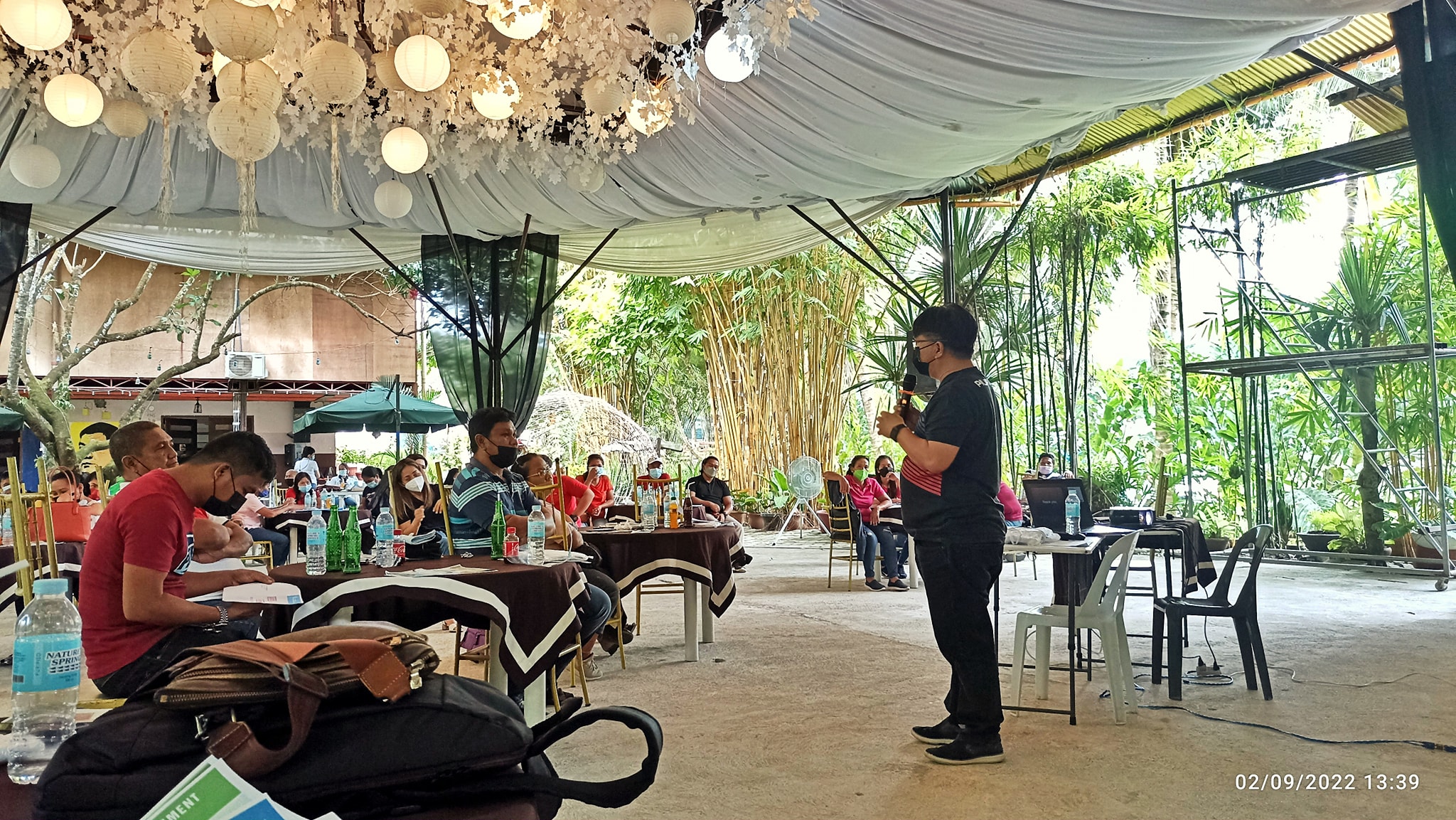
    KIDAPAWAN CITY, February 24, 2022. Deputy Executive Director for Pesticide Eric C. Divinagracia encouraged participants of the ASD Training here to always conduct their business with integrity, compassion, and the farmers’ plight in mind.


    “As pesticide handlers, we are part of the agriculture ecosystem, and as such we should always bear in mind that our ultimate goal is to become enablers of agricultural productivity by selling quality fertilizer and pesticides at reasonable prices for the benefit of our farmers,” Dir. Divinagracia explained.


    Led by its Regional Officer, Ms. Alita Bornea, FPA Regional Field Unit XII initiated this training for Accredited Safety Dispenser (ASD) Training held at HOF Mansion Inn, Balindog, Kidapawan City, Cotabato on February 9, 2022.


    Sixty-one (61) individual business operators and personnel of dealer stores selling fertilizer and agricultural pesticides were present. Resource speakers discussed proper soil management and pesticide application.


    The safe and judicious use, handling, and storage of agricultural pesticides were discussed by Ms. Jennie Basilio, Agriculturist II. She reiterated the importance of proper handling of pesticides because of its toxic and dangerous nature.  


    In addition, Joey Pascua, Agriculturist II based in Kidapawan, emphasized the proper use and storage of fertilizer, including the proper quantity of fertilizer to maximize its impact on the plant’s nutrition levels.


    The Pesticide Poisoning & First Aid and Good Housekeeping principles were explained by Mr. Cherubin Alonzo, Agriculturist II.  Lastly, the FPA-Governing Rules and Regulation was presented by another Agriculturist II, Ms. Maricel Tabigue.


    On the other hand, Ms. Catherine Sumagaysay, Product Stewardship Manager of Syngenta Philippines Inc. explained the Mode of Action and Insecticide Resistance Management. Resistance can be developed when the same pesticide or similar ones with the same mode of action is used repeatedly.


    The training is a regular activity of the field units to ensure the proper handling and effective use of fertilizer and pesticides.  ###


    Written by: Joey B. Pascua | Published: 28 February 2022

      Fertilizer and Pesticide Authority (FPA) Online ISSN: 2815-1674
      Published by the FPA Information and Communications Team

  • Post Odette, FPA reports Php 12.9M damage on fertilizers

    Post Odette, FPA reports Php 12.9M damage on fertilizers

    QUEZON CITY, January 31, 2022 – Typhoon Odette (Rai) hit the Philippines on December 16, 2021, leaving agricultural damage and losses at Php 13.3 billion and affecting more than 500,000 farmers and fishers in Surigao del Norte and Dinagat Islands in Mindanao, five provinces in the Visayas, and the island of Palawan in Luzon.


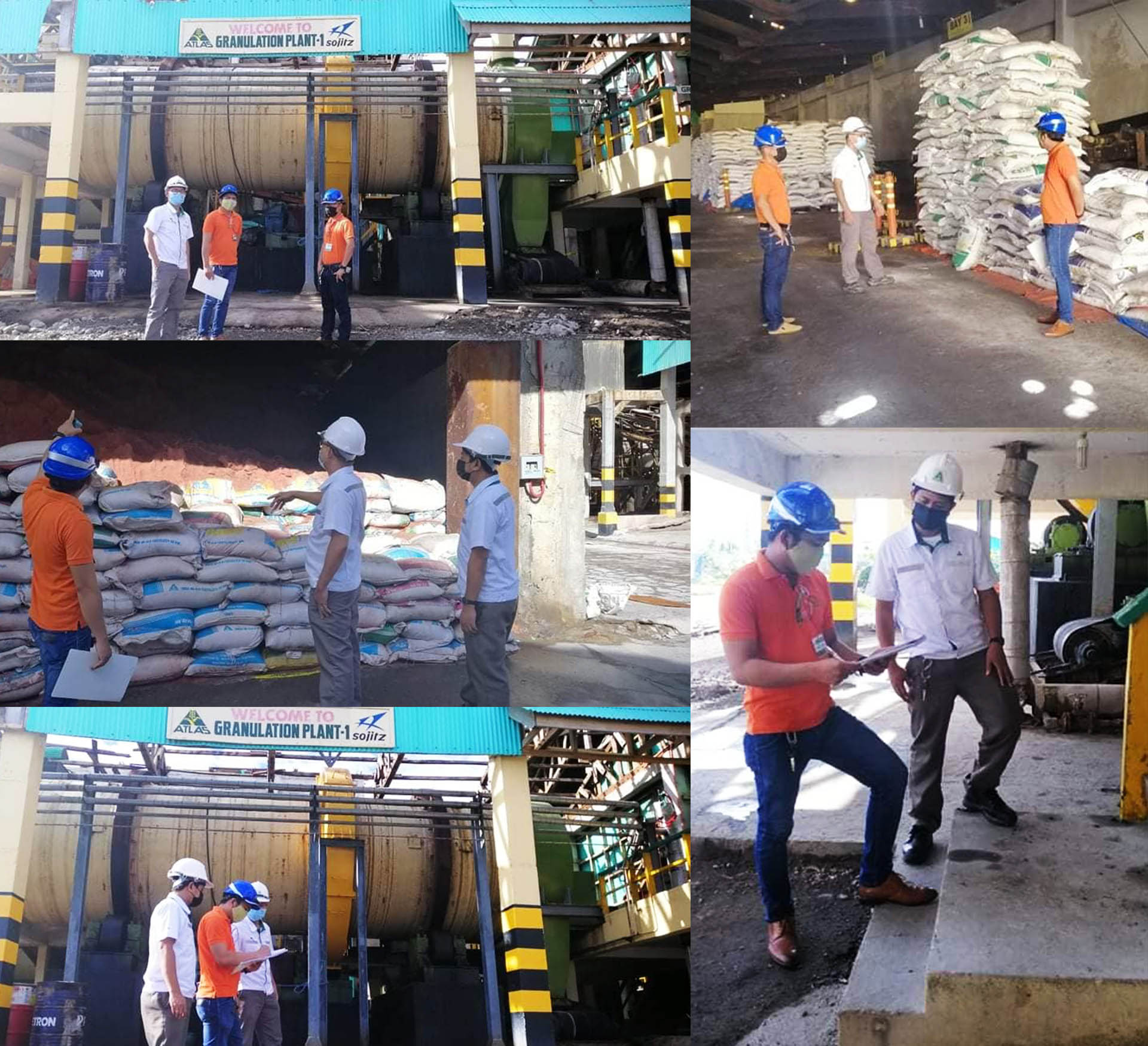
    Nine fertilizer handlers were affected after their FPA-licensed warehouses containing bulk stocks for distribution did not escape the blow of Odette. A total of 8,312 bags of fertilizers in different grades were among the assets damaged by the typhoon, accounting for around 415,600 kilograms of quality compromised fertilizer stocks in said provinces. 


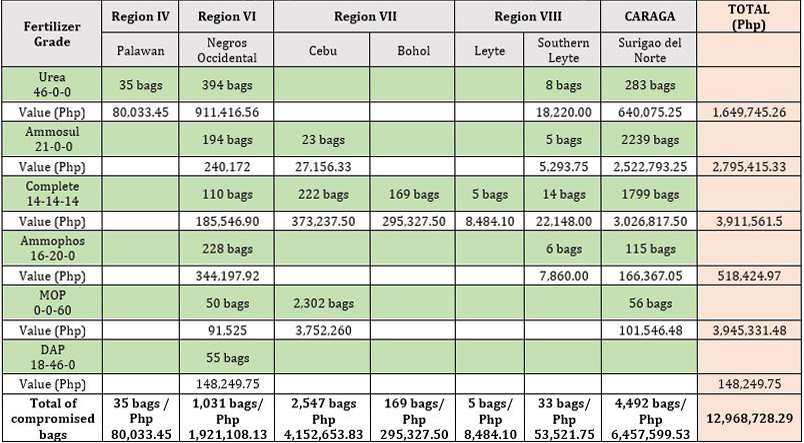
    Handlers such as the Cardinal Farm Supply accounted for 4,492 bags in Surigao del Norte, while the Atlas Fertilizer Company accounted for 2,547 bags in Cebu and the Falcor Marketing Corporation 1,031 bags in Negros Occidental. Table 1 shows the distribution of quality-compromised fertilizer supplies per region affected by the typhoon.


    Estimated Value of Affected Fertilizers


    Based on the price monitoring conducted by the Provincial Officers of FPA from December 14–18, 2021, the estimated value of compromised fertilizers is Php 12.96 million. The provinces of Surigao del Norte, Cebu City, and Negros Occidental constituted 97% of the total value with Php 6.45 million, Php 4.15 million, and Php 1.92 million, respectively. 


    The value of compromised fertilizer stocks reached over a million, such as Ammonium Sulphate (21-0-0), Complete (14-14-14), Muriate of Potash (0-0-60), and Urea (46-0-0) (Table 1). They are valued respectively at Php 2.79 million, Php 3.91 million, Php 3.94 million, and Php 1.64 million. Despite the recorded damages, prices of fertilizers will not be affected, and the importation prices will still dictate their prices. 


    Table 1. Estimated Value of Six (6) Major Grades of Fertilizer Affected per Region


    Crop Estimated Fertilizer Recommendations


    The fertilizer recommendations are referenced from the Philippines Recommends Soil Fertility Management (2006). The data for the actual area affected by the typhoon came from the Department of Agriculture – Disaster Risk Reduction and Management Service (DA – DRRMS).


    Table 2 shows the fertilizer recommendations for the crops planted in the affected areas. Additionally, Philippine National Standards are referenced for the computation of planting distance for specific crops.


    Table 2. Estimated Fertilizer Recommendations of Selected Crops per Hectare
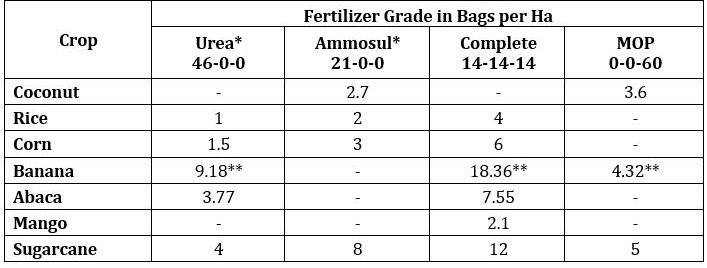
       *Urea and Ammosul may be used interchangeably depending on their availability

       **Requires two to four applications per year


    Affected Provinces


    Palawan


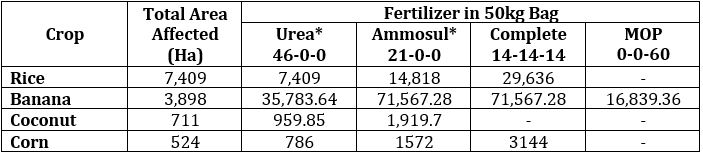
    The total area affected in the Province of Palawan is 12,542 ha. 59.07% of which is planted with Rice (7,409 ha), 31.08% is planted with Banana (3,898 ha), while 5.67% is planted with Coconut (711 ha), and 4.18% is planted with Corn (524 ha). Table 3 shows the estimated amount of fertilizers to be used per crop.


    Table 3. Fertilizer Recommendations for the Area Affected in Province of Palawan
     

    Surigao del Norte


    The total area affected in the Province of Surigao del Norte is 96,252 ha. 96.56% of which is planted with Coconut (92,942 ha), 2.5% is planted with Rice (2,405 ha), and 0.94% is planted with other crops (905 ha). Table 4 shows the estimated amount of fertilizers to be used per crop.


    Table 4. Fertilizer Recommendations for the Province of Surigao del Norte

     

    Negros Occidental


    The total area affected in the Province of Negros Occidental is 58,767 ha. 65.38% of which is planted with Sugarcane (38,420), 31.87% is planted with Rice (18,727 ha), while 2.75% is planted with other crops (1620 ha). Table 5 shows the estimated amount of fertilizers to be used per crop.


    Table 5. Fertilizer Recommendations for the Province of Negros Occidental

      

    Southern Leyte


    The total area affected in the Province of Southern Leyte is 78,456 ha. 83.93% of which is planted with Coconut (65,849 ha), 10.41% is planted with Abaca (8,170 ha), 3.52% is planted with Rice (2,759 ha), while 2.14% is planted with other crops (1,678 ha). Table 6 shows the estimated amount of fertilizers to be used per crop.


    Table 6. Fertilizer Recommendations for the Province of Southern Leyte

      

    Leyte


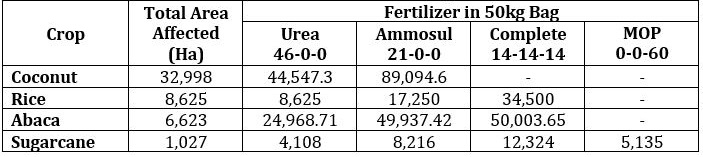
    The total area affected in the Province of Leyte is 49,915 ha. 66.11% of which is planted with Coconut (32,998 ha), 17.28% is planted with Rice (8,625 ha), 13.27% is planted with Abaca (6,623 ha), 2.06% is planted with Sugarcane (1,027 ha), while 1.28% is planted with other crops (642 ha). Table 7 shows the estimated amount of fertilizers to be used per crop.


    Table 7. Fertilizer Recommendations for the Province of Leyte
     

    Cebu


    The total area affected in the Province of Cebu is 8,526 ha. 93.29% of which is planted with Coconut (7,954 ha), 3.48% is planted with Rice (297 ha), and 3.23% is planted with Sugarcane (275 ha). Table 8 shows the estimated amount of fertilizers to be used per crop.


    Table 8. Fertilizer Recommendations for the Province of Cebu

     

    Bohol


    The total area planted in the Province of Bohol is 55,215 ha. 74.84% of which is planted with Coconut (41,324 ha), while 25.16% is planted with Rice (13,891 ha). Table 9 shows the estimated amount of fertilizers to be used per crop.


    Table 9. Fertilizer Recommendations for the Province of Bohol



    Current Inventory Stocks and Requirement


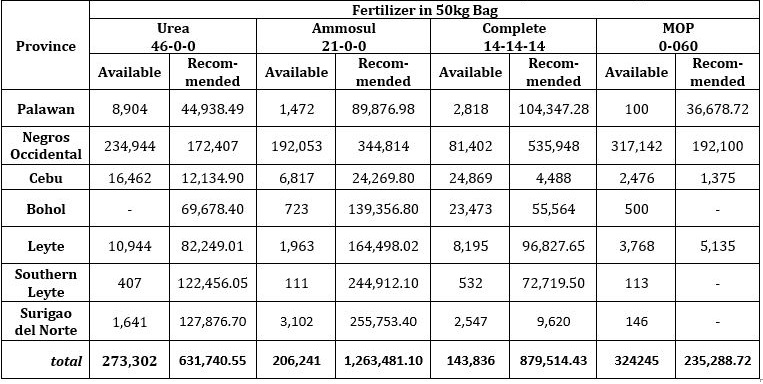
    Based on the current fertilizer stock inventory of January 24-28, 2022, all affected provinces have insufficient fertilizer to supply the estimated recommendation except for the Urea and Muriate of Potash (MOP) in Negros Occidental . The total recommended fertilizers needed to all affected provinces is 3,010,024.80 bags. Table 10 summarizes the available fertilizer and the estimated recommendation.


    Table 10. Available and Estimated Recommendation of Fertilizer per Affected Regions
     

    To mitigate the problem, alternative sources of fertilization should be used. For Coconut, green manure like ipil-ipil and farm organic wastes such as manure of cattle, carabao, pig, goat, chicken, compost, and night soil can be used to replace part of the commercial fertilizer requirements. Coconut crown residues as organic fertilizer and nitrogen-fixing legumes can substitute for Ammonium Sulphate as N-sources while cocopeat and husk for chlorine.


    Actions from the FPA


    The FPA, through its Regional Field Units (RFUs), coordinated with the affected fertilizer handlers. The handlers were informed about the process of the Fertilizer Regulations Division on disposing of unsound fertilizers. 


    Damaged fertilizers due to the typhoon may be categorized as such and may still be sold to registered cooperatives at a discounted price. However, the analysis should still be done to confirm the actual content of the damaged fertilizers. Optimal fertilizer recommendations should be based on the soil and tissue analyses before application. 


    Sources:


    Department of Agriculture – Disaster Risk Reduction Management Bulletin #30 on Typhoon Odette


    Philippine Coconut Authority Techno Guide on Fertilization No. 01/2019


    Philippine National Standards Good Agricultural Practices on Abaca, Banana, Coconut, and Mango


    Department of Science and Technology – Philippine Council for Agriculture, Forestry and Natural Resources Research and Development. Philippine Recommends Soil Fertility Management 2006

     

    Written by: Edward Allen A. Calapatia, Jan Paolo E. Umerez | Published: 7 February 2022

      Fertilizer and Pesticide Authority (FPA) Online ISSN: 2815-1674
      Published by the FPA Information and Communications Team

  • Fertilizer subsidy and securing supply assured by DA-FPA

    Fertilizer subsidy and securing supply assured by DA-FPA

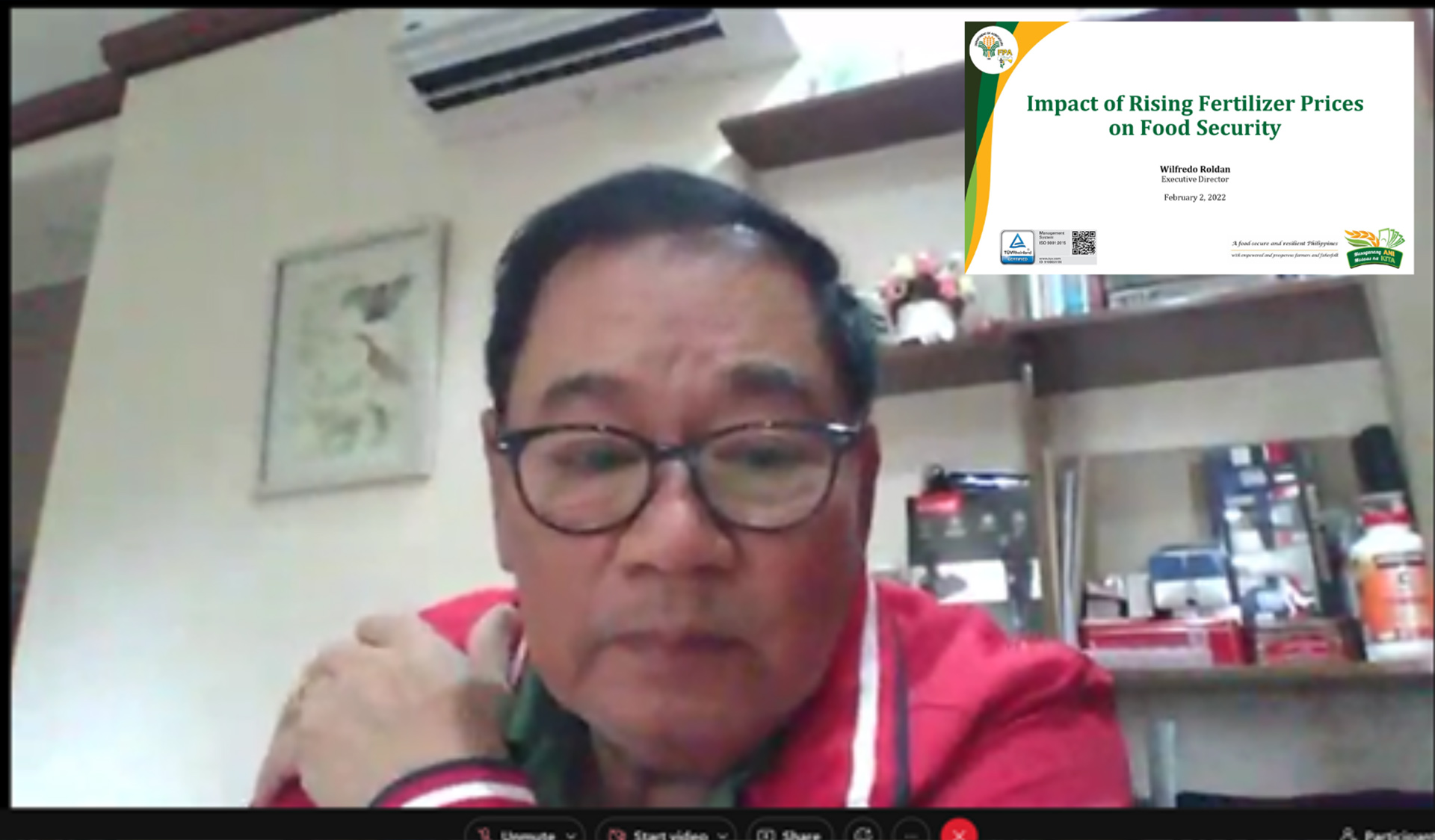
    QUEZON CITY, February 02, 2021 – Fertilizer and Pesticide Authority’s (FPA) Director Wilfredo Roldan assures farmers’ subsidy and collaboration with other fertilizer-producing countries are continuing to aid farmers in the recent price hike, through stabilizing supply. In the 33rd Meeting of the Task Group on Food Security with the Department of Agriculture (DA) on February 2, 2022, Director Roldan thoroughly discussed the impact of rising fertilizer prices on the country’s food security.


    During the presentation, the FPA Director presented the following reasons for the price hike:


    • COVID-19 pandemic that changed the price trends in the global market
    • Gas shortage in Europe made domestic fertilizer manufacturers to cut production due to a hike in energy prices
    • Increased fertilizer demand in countries like China, the USA, India, Australia, and Brazil
    • Fertilizer exports were curtailed due to the complex procedures and strict measures for export cargoes with regards to the implementation of the China Inspection Quarantine (CIQ) policy
    • Increased transport and logistic cost
    • China, Indonesia, Malaysia prioritize domestic fertilizer requirement
    • India’s increased demand for Urea
    •  Australia’s expansion for crop areas require a 2% increase in fertilizer demand
    • South Korea’s need for urea and sourcing out from other countries at a higher price

    The above mentioned are global circumstances that affect the movement of fertilizer supply and demand, not just influencing but absolutely dictating local prices. This also roots from the lack of resources of the country to produce its own inorganic fertilizers.


    Importance of Fertilizer in Food Security


    Director Roldan pointed out the importance of fertilizer inputs on food security as it aids crops to grow healthily by maximizing potential nutrients and replenishing the soil after the harvest. Fertilizer enriches the soil which causes the plants to absorb such nutrients, and in turn, transfer these nutritive elements to its consumers – the animals and the people.


    Ways forward


    To monitor and stabilize the fertilizer supply, the FPA and its partner agencies continue to come up with several solutions. Actions implemented in 2022 for temporary relief are:


    • Continuation of the fertilizer subsidy (Urea/T14) program to farmers. Fertilizer subsidy is under the DA’s Rice Resiliency Project. Farmers and farm laborers who are registered to the DA’s Registry System for Basic Sectors in Agriculture (RSBSA) and who received free rice seeds both inbred and hybrids from the DA are eligible under the department’s fertilizer subsidy program. The subsidy can only be availed via DA’s voucher system where farmers will present their vouchers to get free fertilizer. Registration for the said subsidy is facilitated by the regional agricultural offices;
    • Collaborate with the Fertilizer Industry Association of the Philippines (FIAP) and other cooperatives in initiating negotiations with fertilizer-producing countries to secure supply allocations. This will secure fertilizer supply for 2022, expecting stable prices or lull price inflation for the year; and
    • Constant monitoring and surveillance of fertilizer stock inventory and local pricing.

    For immediate and medium-term solutions:


    • Promotion and implementation of the balanced fertilization strategy (BFS) to cut farmers’ dependence on inorganic fertilizer by utilizing a combination of organic and inorganic fertilizers; and
    • Capacitate farmers’ federation, cooperatives, and associations to directly import fertilizer.

    For medium to long-term solutions, FPA encourages the development of organic fertilizers and other non-traditional inorganic fertilizers (new grades, specialty and controlled release inorganic fertilizers) along with the strengthened information and educational initiatives about farm management with reference to soil fertility mapping of all regions.


    Lastly, the long-term solution is to review the viability of government intervention to rehabilitate Philippine Phosphate Fertilizer Corporation (PhilPhos) and other local fertilizer producers. PhilPhos rehabilitation has been ongoing since 2018. And this solution has been proposed and planned since 2021, and is still being processed.


    Collaborative efforts from the national office down to the local government, especially the farming and fishing communities are seen absolutely necessary in the improvement of the current felt impacts of global fertilizer price inflation. Further, while the Agency never stops devising solutions to deplete the country’s dependence to fertilizer importation, the FPA seeks for openness and cooperation from the agricultural sector to successfully advance development in the fertilizer industry, and food production. ###


    Sources:


    Department of Agriculture. (2022, February 2). 33rd Meeting of Task Group on Food Security.


    Arcalas, J. (2021, October 25). DA readies short-, long-term ways to cut fertilizer prices. Business Mirrorhttp://bitly.ws/oh2R


    Gomez, E. J. (2021, August 18) DA assures fertilizer subsidy for wet planting season. The Manila Timeshttp://bitly.ws/oh2W


    Fertilizer and Pesticide Authority. (2020) Fertilizer Regulatory Policies and Implementing Guidelines (Blue Book) http://bitly.ws/oh3x


    Roldan, W., Mula, M., Lansangan, J., Reyes, R., Layag, I. (2021, November 11) Rising Fertilizer Prices: A Reality. https://bit.ly/3cle6Yr


    Fertilizer and Pesticide Authority. (2021, December 1) FPA attends OneDA ManCom Meeting. https://bit.ly/31R3FKh


    Written by: Wendycharlene B. Almasen | Published: 3 February 2022

      Fertilizer and Pesticide Authority (FPA) Online ISSN: 2815-1674
      Published by the FPA Information and Communications Team

  • FPA Chief clarifies fertilizer price issues, lays out DA-FPA’s counter-measures

    FPA Chief clarifies fertilizer price issues, lays out DA-FPA’s counter-measures

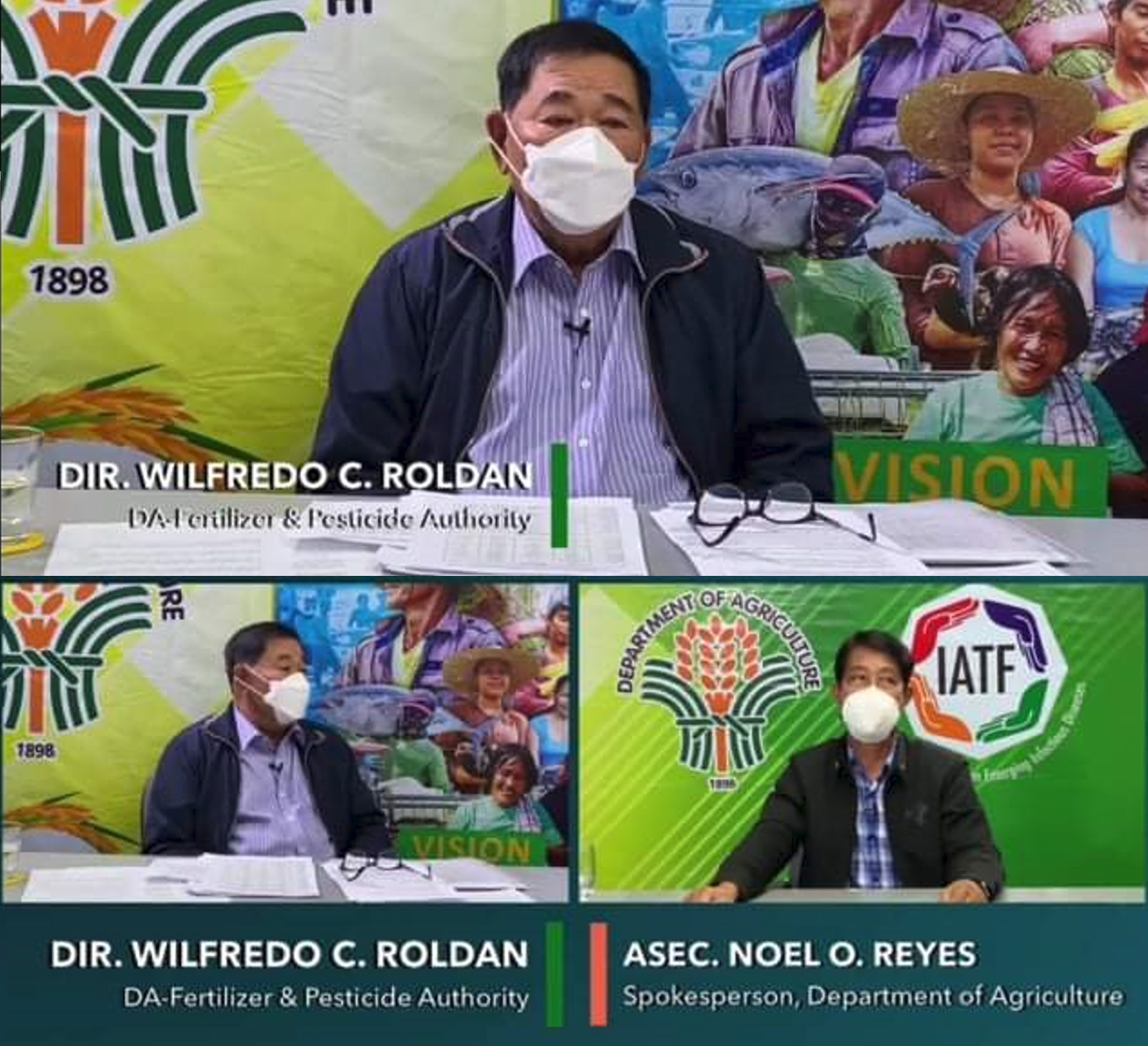
    QUEZON CITY, February 2, 2022  – The Fertilizer and Pesticide Authority (FPA) Executive Director Wilfredo Roldan explains the basis for global fertilizer price shoot-up and the Agency’s actions in addressing current market conditions in the Department of Agriculture’s (DA) 165th Virtual Presser IATF Task Group on Food Security on January 31, 2022.

    With the Spokesperson and Assistant Secretary (ASec) for Strategic Communications Noel Reyes, FPA Executive Director Roldan eased the public’s wariness and raised awareness regarding global-political reasons for fertilizer price hikes. The two officials also discussed the status of actions taken by the Agency to mitigate the situation.

    During the exchange, Director Roldan pointed out the shortage of supply in the global scene as the primary reason for price movement. As COVID-19 progresses, fertilizer supply has greatly declined as countries halt their international exportation to strengthen their local food production. 

    The Philippines’ absence of raw materials for fertilizer production leads to its great reliance on importation and even the tagged locally-produced agri-inputs are made from imported raw materials.

    Complementary factors are traced back to the sudden increase of demand for Urea, increase in agricultural lands in Canada, and an increase in livestock in Brazil.

    The DA and the FPA in immediate response have negotiated with other fertilizer-producing countries such as China, Indonesia, Malaysia, and Iran. The Agency is now in coordination with China, while Indonesia started releasing stocks for our local distribution, however, Iran’s banned status imposed by the United States prevents direct negotiation with the country. Currently, the Philippines have 200,000 metric tons of fertilizer available for the coming cropping season

    For the agencies’ stronger and longer-term measures, the adaption of the Balance Fertilization Strategy (BFS) aims to utilize both organic and inorganic fertilizers to protect soil health and aid in maximization of crop yield potentials has been in the position to be implemented. As directed by the DA, the FPA took the lead in studying and promoting the utilization of BFS along with other bureaus and agencies such as the Bureau of Animal Industry (BAI), Bureau of Soils and Water Management (BSWM), Agricultural Training Institute (ATI), Bureau of Agricultural Research (BAR), Bureau of Plant Industry (BPI), among others. The project aims for continuous innovation of production, and utilization of technologies and strategies on fertilizer use practice to halt the country’s dependence on inorganic and imported fertilizer.

    When asked if a price freeze for fertilizer products is possible, Director Roldan responded that such a proposal would be difficult as the global market scene dictates the actual price accumulated from the importer down to the sellers. (For a more detailed explanation, read Rising Fertilizer Prices: A Reality: http://bitly.ws/ofZd)

    FPA chief also laid down an option for cooperatives and groups in the Philippines to a direct import negotiation to cut fertilizer price, however, with the global supply shortage, only one group in Isabella managed to get through. Further, ASec Reyes commented that the Isabella cooperative can be a model for future agricultural federations’ direct facilitation of fertilizer importation. This way, local distributors have wider control over the distribution and marketing of imported fertilizer.

    The FPA chief concluded the presser with a call to look at the situation from a more proactive perspective saying, “The difficulty we experience today is an opportunity in fact for the innovation of the agricultural sector.” This is in relation to a multi-sectoral collaboration for more resilient and sustainable measures to diminish import reliance and improve the agroecosystem in the country.

    He added, “[To the farmers,] Trust in your government because the government is trying everything to increase your production and your income as far as agricultural products are concerned.”

    The virtual presser was released on PTV4, RTVM DA Facebook page on February 1, 2022, and is still viewable on DA’s Facebook page. ###


    Source: Department of Agriculture Facebook Page, https://fb.watch/aVQiFxlzex/


    Written by: Wendycharlene B. Almasen | Published: 2 February 2022

      Fertilizer and Pesticide Authority (FPA) Online ISSN: 2815-1674
      Published by the FPA Information and Communications Team

  • FPA establishes publications through ISSN, ISBN recognition and NBDB certified

    FPA establishes publications through ISSN, ISBN recognition and NBDB certified

    The Fertilizer and Pesticide Authority (FPA) has authored and published several books, articles, learning materials, and various prints for the past years. With the growing numbers of published materials, the FPA, through DED Myer G. Mula, pursued to establish a unique identity through the utilization of the International Standard Book Number (ISBN), International Standard Serial Number (ISSN), and certification by the National Book Development Board (NBDB) as a book publisher.


    ISBN is a 13-digit code assigned to books, audiobooks, pamphlets, software, films, videos, and articles registered to the Philippine ISBN Agency under the National Library of the Philippines. It is the unique identifier for publishers which monitor clients’ consumption data of the published materials and ensure clients’ the validity of the specific item.


    On the other hand, ISSN was developed after ISBN. It is an 8-digit code used to identify newspapers, journals, magazines, and periodicals both printed and electronic. It is specifically for continuing sources and serials. It is also registered to ISSN National Centre of the Philippines under the National Library.


    These identifiers provide credibility to the publication, as it is also recognized by international standards although this should not be mistaken for copyrights. It also eases the archiving and cataloging, and abates search for materials. This is handy for updating files, establishing links between files, exchange of data, and claiming missing issues.


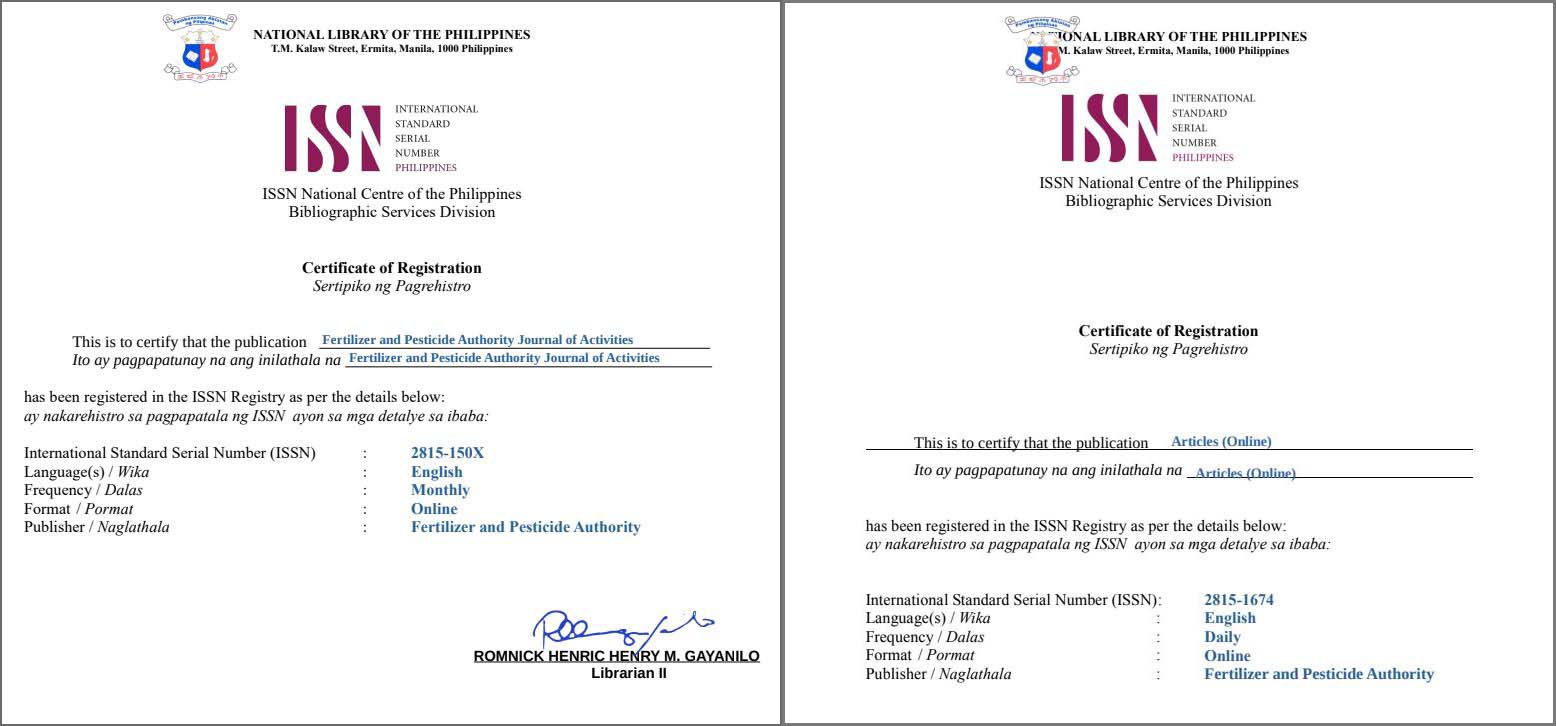
    The FPA has registered 4 materials under ISSN:


    • Annual Report which is registered as 2815-1283 for Print and 2815-1291 for Online
    • FPA Journal of Activities which is registered as 2815-150X for Online
    • Articles (Online) which is registered as 2815-1674 for the website articles

     Likewise, the FPA was certified by the National Book Development Board (NBDB) as a book publisher for print and digital resources which will be valid until May 31, 2023. This certification will be used for the application of ISBN. The FPA is planning the ISBN registration for Communications Manual, Operations Manual, Training Manuals, FPA Guidelines and Directives, and pamphlets.###


    Source:

    National Library of the Philippines website, ISSN and ISBN

    Written by: Wendycharlene B. Almasen | Published: 26 January 2022

      Fertilizer and Pesticide Authority (FPA) Online ISSN: 2815-1674
      Published by the FPA Information and Communications Team